
By James Okonkwo - Posted on 2025-12-04 - 5 min read
Sports Shoes Cleaner: Tips for Long-Lasting Cleanliness
Expert guide to sports shoe cleaners: safe cleaning for mesh and knit, drying times, odor control, DIY vs professional care in the UAE, and habits that keep trainers fresh longer.
Professional Shoe Care
Need Expert Shoe Care?
Schedule a pickup and let ShoeCare handle deep cleaning, restoration, and protection for your shoes.
4.9 ★
Customer Rating
7,000+
Shoes Restored
Same Day
Pickup
In This Article
- 1TL;DR
- 2Introduction: why sports shoe cleaning matters
- 3Why sports shoes get dirty faster
- 4Why careful cleaning protects performance
- 5Know your materials first
- 6Step-by-step: clean sports shoes safely
- 7DIY vs professional sports shoe cleaning
- 8Choosing a sports shoe cleaner
- 9Protect shoes after cleaning
- 10Odor control and freshness
- 11Simple routines by use
- 12Staying cleaner during workouts
- 13Common cleaning mistakes
- 14Why the right cleaner extends shoe life
- 15Conclusion
TL;DR
- Use a mild, material-safe sports shoe cleaner—not bleach, hot water, or the washing machine.
- Mesh and knit trap sweat and dust fast; brush lightly, rinse minimally, and air-dry in shade (typically 6–12 hours).
- Remove laces and insoles, clean footbeds separately, and air out after every wear.
- DIY suits light upkeep; professional cleaning helps deep stains, premium pairs, or persistent odor.
- After cleaning: repellent spray where safe, rotation, dry storage, and quick wipes extend life—especially in Dubai’s heat and dust.
Introduction: why sports shoe cleaning matters
Sports shoes face sweat, dust, gym floors, and outdoor grime. Uppers in mesh, knit, and synthetics pull in moisture and particles; midsoles and glue lines suffer if you use harsh detergents, soaking, or direct sun. This guide covers how to choose a sports shoe cleaner, a safe hand-cleaning flow, protection and odor habits, and when to book a specialist. For service options see shoe cleaning prices Dubai, sports sneakers cleaning, and book shoe cleaning in Dubai.
According to the American Podiatric Medical Association, wearing clean, well-maintained footwear supports foot health and helps prevent skin conditions. Research also confirms that sneakers made from breathable materials require regular cleaning to maintain their structural integrity and performance.
Why sports shoes get dirty faster
Training shoes work harder than casual pairs: flexing opens gaps for grit, breathable fabrics hold sweat, and outdoor runs add mud and road film.
Sweat and bacteria
Moisture in the upper and footbed feeds odor and breakdown if cleaning is delayed.
Outdoor and gym environments
Mud, grass, rubber dust, and chalk add layers that embed in mesh.
Breathable uppers
Mesh and knit clean differently than leather— they need gentle chemistry and soft brushes.
Why careful cleaning protects performance
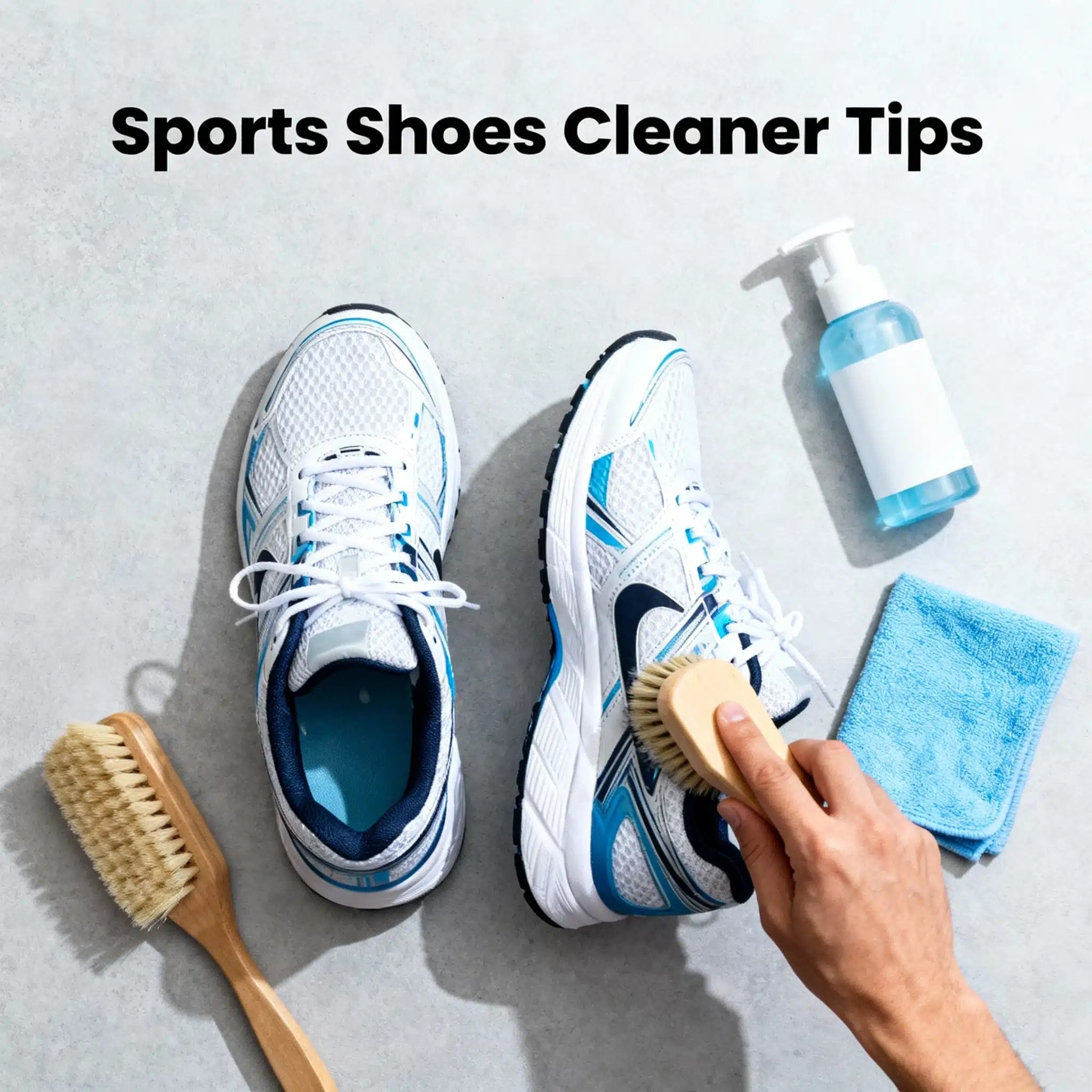
Major brands recommend hand cleaning for performance uppers: mild solution, brush with the knit direction, and air-drying—not dryers or hot radiators. That preserves cushioning, dyes, and bond lines. Thoughtful cleaning is part of real shoe care, not only aesthetics.
Know your materials first
Match method to upper and sole:
Mesh and knit
Soft brush, mild foam or liquid, minimal water.
Synthetic leather
Foam cleaner; avoid solvents that crack the finish.
Canvas
Mild soap; gentle scrub to limit fade.
Suede or nubuck
Specialist products and suede brushes—avoid soaking.
EVA and rubber
Firmer brush on outsoles; wipe midsoles carefully to avoid craze marks.
Step-by-step: clean sports shoes safely
Preparation
- Remove laces and insoles
- Knock off dry dirt; dry-brush the upper
- Have a mild cleaning solution ready (commercial sports shoe cleaner or very mild soap)
Core steps
Step 1 — Mix and apply
Use a dedicated sports shoe cleaner or dilute mild soap. Skip bleach and strong detergents.
Step 2 — Brush gently
Soft brush on mesh; medium on rubber; work in small circles on stains.
Step 3 — Rinse minimally
Avoid drenching. Wipe with a damp cloth instead of holding under a tap.
Step 4 — Dry correctly
Air-dry indoors or in shade. No sunlight, heaters, or tumble dryers—heat weakens adhesives.
Insoles and laces
Clean insoles with the same mild approach; let them dry flat. Soak laces in warm water with a little cleaner, rinse, and air-dry.
What not to do
- Machine washing or aggressive spin cycles
- Soaking for hours
- Bleach or harsh solvents
- Stiff brushes on delicate mesh
DIY vs professional sports shoe cleaning
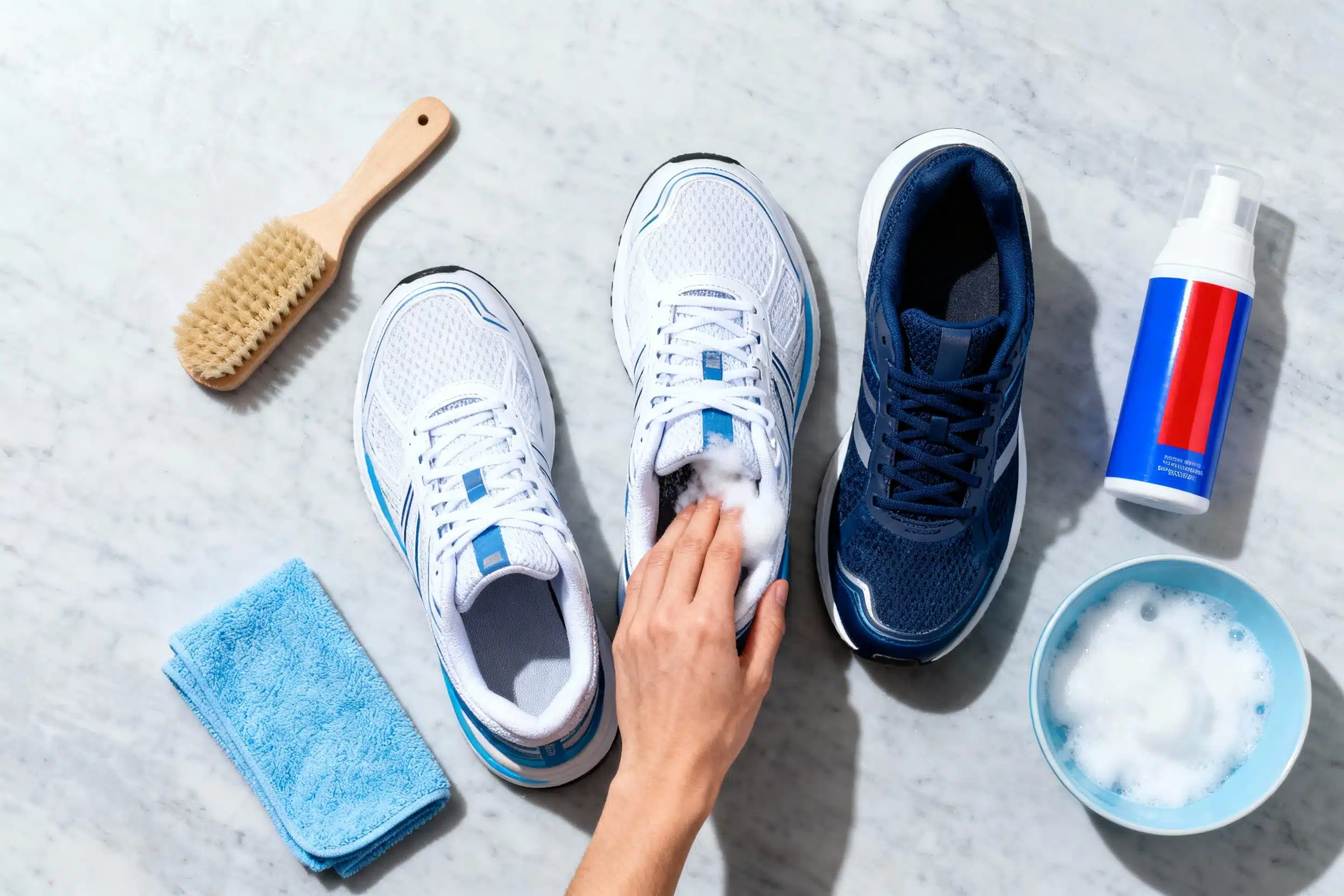
DIY is ideal for weekly dust, light stains, and routine odor maintenance. Professional cleaning adds deeper extraction, material-specific chemistry, deodorizing, and sometimes light restoration—useful for expensive runners, limited editions, or set-in stains.
When DIY fits
- Regular training shoes with surface dirt
- Quick refresh between harder sessions
When to go pro
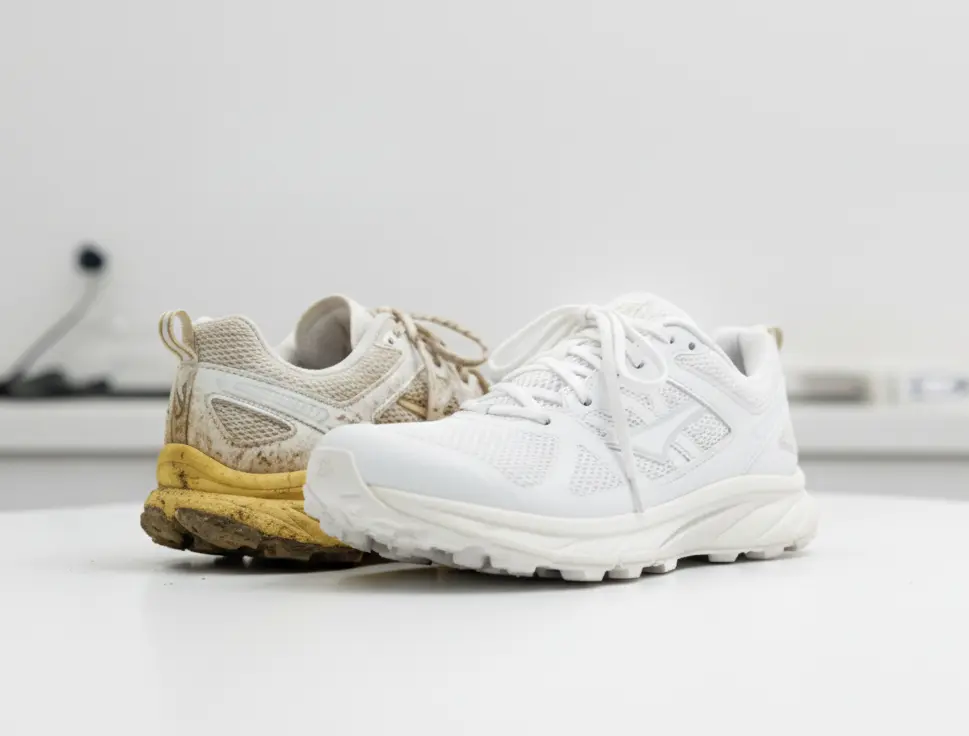
- Oil or grease marks, heavy mud, or yellowing that home steps do not shift
- Premium or delicate finishes you do not want to experiment on
Choosing a sports shoe cleaner
Look for: material safety on mesh and synthetics; mild formulation without bleach; effective soil removal; low residue; and guidance compatible with your upper. A good product supports frequent safe cleaning without fading or fiber damage.
Protect shoes after cleaning
- Repellent or stain-resistant sprays only where the label matches your upper
- Cool, ventilated storage—not sealed damp bags
- Rotate pairs so each dries fully between wears
- Quick post-workout wipe to stop sweat film embedding
- Shoe trees or paper to hold shape while drying
Odor control and freshness
Air shoes after each use; pull insoles to dry; use charcoal or baking soda as directed; wash insoles regularly. Pair ventilation with mild cleaning so bacteria do not return overnight.
Simple routines by use
- Daily: air out; quick sole/upper wipe if needed
- Weekly: light brush and spot clean high-wear areas
- Monthly or after mud runs: deeper clean and inspection of wear
Staying cleaner during workouts
- Keep wipes or a small brush in your bag
- Avoid unnecessary mud and standing water when you can
- Carry a travel-size safe cleaner for foam touch-ups
- Wipe sweat after sessions—especially in hot climates
Common cleaning mistakes
- Hot water or aggressive scrubbing
- Sun or heater drying
- Leaving shoes wet in a bag
- Wearing them before fully dry
- Ignoring stains until they set
Why the right cleaner extends shoe life
Gentle products help fibers, foams, and glues last. Harsh chemistry accelerates fraying, separation, and odor. Safe repeat cleaning beats rare aggressive attempts.
Also Read:
- Best Sneaker Cleaners in Dubai: What Works & What to Avoid
- How Often Should You Clean Your Sneakers in Dubai's Climate?
- How to Extend the Life of Your Sneakers
Conclusion
Long-lasting cleanliness comes from right products, gentle technique, full drying, and smart storage—plus professional help when home care hits its limit. ShoeCare by WashOn offers expert cleaning with free pickup and delivery in Dubai: book shoe cleaning in Dubai or explore sports sneaker cleaning service Dubai.