TL: DR
- This blog is written for athletes, gym-goers, runners, sports enthusiasts, sneaker owners, and anyone who wants long-lasting, clean sports shoes. It explains why proper cleaning matters and how the right sports shoe cleaner extends shoe life.
- Sports shoes get dirty faster due to sweat, breathable mesh fabrics, outdoor dust, and gym surfaces, making regular and gentle cleaning essential for durability and hygiene.
- The blog provides a complete step-by-step guide on how to clean sports shoes safely, including choosing the right cleaner, brushing methods, drying techniques, and what mistakes to avoid (like using bleach, sunlight, or washing machines).
- It explains how to protect sports shoes after cleaning using water-repellent sprays, proper storage, rotation, odor-control methods, and daily/weekly maintenance routines for longer freshness.
- The guide highlights when to use DIY cleaning vs professional shoe cleaning services and why high-quality sports shoe cleaners help prevent fabric damage, protect cushioning, reduce odor, and extend the overall lifespan of your footwear.
Sports Shoes Cleaner: Tips and Tricks for Long-Lasting Cleanliness
Sports shoes have become an important part of everyday life, not only for athletes but for anyone who values comfort, performance, and durability You can use them to run, work out in the gym, train, walk, or even use them for casual outings, but maintaining cleanliness of your sports shoes will dictate the duration they will last. However, unfortunately, lots of individuals do not take care of their shoe cleaning and they can shorten the life of their shoes.
This step-by-step guide will help you understand how to clean sports shoes what sports shoe cleaner to use, what different materials need, and the other tips that will be important to help you preserve sports shoes to prevent their premature wastage. Whether it is suggested products or everyday products care, there is all you would need to know in order to keep your shoes fresh, odor-free and clean over the years in this blog.
Introduction: Why Sports Shoe Cleaning Matters
Sports shoes are exposed to dust, sweat, mud, bacteria, and harsh outdoor conditions. Unlike regular shoes, sports footwear is made with breathable mesh, knit fabrics, cushioned soles, and sweat-absorbing materials. These fabrics accumulate dirt and odor faster, making shoe cleaning more important than ever.
Many people still wash their shoes incorrectly using high heat, harsh detergents, direct sunlight, or long soaking which damages the fabric and reduces cushioning. The goal of this guide is to help you clean your shoes the right way using the best methods and the right sports shoes cleaner.
Why do Sports Shoes Get Dirty Faster?
Sports shoes get dirty quickly because they’re used in high-activity environments. Breathable materials like mesh absorb sweat, dust, and bacteria easily. Outdoor surfaces such as mud, grass, and road dirt add more grime, while gym floors bring sweat residue and rubber dust. Frequent flexing during workouts creates tiny gaps that trap dirt. Since sports shoes are worn more often, they naturally accumulate stains and odor faster than regular footwear.
Sweat Absorption
Sports shoes trap sweat during workouts. If not cleaned regularly, the moisture leads to odor and bacterial growth.
Outdoor Usage
Activities like jogging, cycling, and training bring shoes in contact with mud, grass, and dust.
Gym Surfaces
Gym floors contain sweat, chalk powder, rubber dust, and oil marks.
Breathable Fabric
Mesh and knit absorb dirt faster than leather, requiring frequent use of a proper sports shoe cleaner.
Understanding these factors helps you choose the right cleaning solution and adopt a regular cleaning routine.
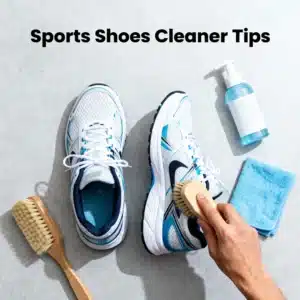 Why does deliberate shoe cleaning matter for sports Shoes?
Sports shoes see sweat, dust, mud, and frequent flexing, often more than regular casual shoes. Fabrics such as knit or mesh are breathable but also invite dirt and odor if ignored. Even sturdy rubber or synthetic parts can yellow, crack, or lose grip when neglected.
Leading brands recommend hand-cleaning rather than machine washing performance uppers to avoid damage to fabric or dyes For example, Nike’s hand‑wash guidance for mesh or Flyknit shoes recommends a mild soap solution, brushing in the knit direction, and air‑drying rather than using a dryer. This avoids harsh chemicals, hot water, and machine agitation that can harm the materials.
Similarly, specialist running footwear brands advise gentle hand washing for fabric or mesh uppers, avoiding submersion or harsh cleaners, again underscoring that thoughtful shoe cleaning protects function and longevity.
The takeaway: regular, careful cleaning is not just cosmetic, it’s essential shoe care that keeps cushioning, structure, and materials working as intended.
Understanding Sports Shoe Materials Before Cleaning
Before cleaning any sports shoes, it’s important to understand the material they’re made from. Each material reacts differently to water, cleaning solution, and scrubbing.
1. Mesh & Knit Fabric
These are lightweight and breathable but absorb sweat and dirt easily. They require gentle cleaning, soft brushes, and mild solutions.
2. Synthetic Leather
Common in training and lifestyle shoes, synthetic leather is easier to wipe clean. Use a foam-based shoe cleaner and avoid harsh chemicals to prevent cracking.
3. Canvas
Durable but prone to stains. Needs mild soap and soft brushing to avoid fading or fabric wear.
4. Suede or Nubuck
These materials are delicate and require specialized shoe cleaners and suede brushes. Avoid water whenever possible.
5. EVA & Rubber Soles
These parts can handle firmer brushing. They collect mud and grit, so a slightly stronger cleaning solution works well.
Step-by-Step Guide: How to Clean Sports Shoes Properly
Here is the most recommended and safest method for cleaning sports shoes.
Pre-Cleaning Preparation
Before using any shoe cleaner, do the following:
- Remove laces and insoles
- Knock shoes together to remove loose dust
- Brush off surface dirt
- Prepare a mild cleaning solution (if using DIY mixture)
This ensures deep cleaning and prevents dirt from spreading.
Cleaning Process (Core Steps)
Step 1: Prepare Your Cleaning Mix
Use a professional sports shoe cleaner or mix mild soap with water. Avoid detergents and bleaching powders.
Step 2: Apply the Cleaning Solution
Use a soft brush or microfiber cloth to apply the foam or liquid evenly.
Step 3: Scrub Gently
Use:
- Soft brush for mesh
- Medium brush for soles
- Hard brush for deep stains
Clean in circular motion for the best results.
Step 4: Rinse Properly
Do not place it under running water.
Instead, wipe with a damp cloth to avoid overwetting.
Step 5: Drying the Right Way
- Air dry indoors
- Keep away from direct sunlight
- Avoid hair dryers and heaters
Direct heat damages the glue and weakens the shoe’s structure.
Cleaning Insoles
Insoles retain the most odor.
- Use a deodorizing shoe cleaner
- Apply foam and scrub lightly
- Sun-dry insoles separately (insoles can handle sunlight better)
Cleaning Laces
- Soak in warm water with mild cleaning solution
- Rinse properly
- Air dry naturally
What Not To Do When Cleaning Sports Shoes
- Don’t wash in a washing machine
- Don’t expose to direct sunlight
- Don’t use bleach
- Don’t soak shoes for hours
- Don’t use hard brushes on mesh materials
Avoiding these mistakes helps you protect sports shoes and extend their lifespan.
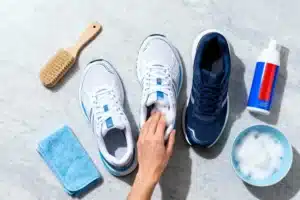 DIY vs Professional Sports Shoe Cleaning
When it comes to maintaining clean, fresh, and long-lasting sports shoes, you can choose between DIY cleaning at home or opting for professional shoe cleaning services. Each method has its advantages and ideal use cases.
DIY Sports Shoe Cleaning
A great option for regular maintenance and light dirt.
✔ Benefits
- Cost-effective: Uses common items or mild sports shoe cleaner products.
- Convenient: Can be done anytime at home.
- Good for weekly care: Ideal for removing surface dust, sweat, and basic stains.
✔ Best For
- Everyday running shoes
- Gym shoes with light dust
- Quick odor control
- Routine shoe care
Professional Sports Shoe Cleaning
A smart choice for tough stains, premium shoes, or deep refurbishing.
✔ Benefits
- Deep cleaning technology: Experts use advanced tools, premium cleaning solution, and material-safe methods.
- Better stain removal: Handles mud, oil marks, mold, yellowing, and embedded dirt.
- Material-specific care: Professionals know how different fabrics react and choose the right shoe cleaner accordingly.
- Restoration options: Color touch-ups, deodorizing, steaming, and protection coating.
✔ Best For
- Expensive branded sports shoes
- Limited-edition sneakers
- Shoes used on muddy or rough terrains
- Long-term shoe maintenance
Choosing a sports shoe cleaner or cleaning solution
When shopping for a shoe cleaner or sports shoes cleaner, consider these attributes:
- Material safety: Works across mesh, knit, synthetic, leather, or canvas without discoloration.
- Mild formulation: Avoids bleach, strong solvents, or harsh abrasives. Natural or oil‑derived soaps are often highlighted for their gentler impact on fabrics while still dissolving dirt.
- Effective stain removal: Handles everyday grime, sweat residue, and typical outdoor stains.
- Ease of use: Foam or liquid that spreads evenly, not overly runny, and easy to rinse off.
- Drying and odor management support: Complementary guidance or product features that support quick drying, less staining, or neutralizing odor.
A cleaner that satisfies these points lets you perform sports shoe cleaning confidently whether for light weekly upkeep or more thorough deep cleans.
How to protect sports shoes after cleaning?
Cleaning is only half the story; protection maintains results:
- Water‑repellent or stain‑resistant sprays on compatible materials reduce staining and make future cleaning easier. Use only on materials stated as safe by the spray product.
- Proper storage: store shoes in a cool, dry place, not in a sealed bag with humidity. Use shoe bags or shelves to let air circulate, preventing damp odor or mold.
- Rotate pairs: if possible, alternate shoes to allow full drying between uses. This cuts down on continuous moisture buildup inside.
- Quick wipe after use: a 30‑second wipe with a damp cloth after intense sessions removes surface sweat and dust that would otherwise embed into fabric.
- Shoe trees or stuffing: maintain shape, reduce creasing, and speed up drying. This is especially useful for knit or mesh uppers that can deform when left wet.
Together, these habits help you protect sports shoes and keep them looking and performing their best.
Odor control and long‑term freshness
Odor is a common complaint even with clean shoes. Strategies:
- Air out shoes immediately after use: remove insoles if possible, and let shoes breathe.
- Use deodorizing agents sparingly—baking soda powders, charcoal inserts, or light sprays designed for shoes can help. Ensure any product is safe for the shoe’s material and used in recommended amounts.
- Regular mild cleaning: prevents sweat salts and bacteria from seeping into fabric, reducing deep‑set odor.
- Wash insoles periodically: insoles often hold the most odor; cleaning them is essential for real freshness, not just surface appearance.
A consistent odor‑control routine keeps shoes usable longer between deeper cleans and avoids damaging attempts like excessive chemicals.
Daily and weekly routines that keep shoes cleaner longer
Different users have different schedules, but a simple routine can fit most lifestyles:
- Daily: quick wipe of sole and upper, remove moisture by airing the pair; store in open area.
- Weekly: light brush and mild solution cleaning on visibly dirty areas; clean laces or insoles if needed.
- Monthly or as needed: a deeper clean, especially after hikes, muddy runs, or heavy indoor use; check for signs of wear, loss of grip, or deteriorating fabric.
This layered approach means fewer emergencies with stains, less time spent on intensive cleaning, and longer life for shoes used in sports or fitness.
When to seek professional help
Some stains, oils, or deep discolorations may not respond well to home methods. Cases where professional services or specialist cleaners can help:
- Oil or grease stains from sports gear or fields.
- Deep, embedded dirt that does not budge with multiple home cleanings.
- Premium, limited‑edition, or specialty shoes where material or finish is costly and delicate.
- Mold or heavy bacterial buildup in shoes stored improperly for a long time.
Professional cleaning can restore appearance and extend life though at higher cost when home cleaning reaches its limits. Use it selectively on important pairs rather than routinely for every pair.
Tips to Protect Sports Shoes After Cleaning
Cleaning your sports shoes is only half the job protecting them afterward is what keeps them looking fresh, long-lasting, and odor-free. Here are the most effective ways to protect sports shoes after cleaning:
1. Let Shoes Dry Completely
Always ensure your shoes are fully dry before wearing them again. Wearing damp shoes leads to odor, bacteria growth, and weakens the fabric over time.
2. Use a Water-Repellent Spray
A light coating of waterproof or stain-resistant spray helps:
- Repel dirt
- Prevent water marks
- Reduce staining on mesh and knit materials
Great for runners and outdoor athletes.
3. Store Shoes in a Cool, Ventilated Space
Avoid sealed boxes or humid areas.
Proper airflow prevents mold and keeps shoes smelling fresh.
4. Insert Shoe Trees or Paper
Shoe trees help:
- Maintain shape
- Absorb leftover moisture
- Prevent creasing
If you don’t have shoe trees, use clean, dry paper.
5. Rotate Your Shoes
Don’t wear the same pair every day.
Rotating shoes lets each pair air out naturally, increasing life and reducing odor buildup.
6. Use Deodorizing Inserts
Charcoal bags or silica gel packs inside your shoes help absorb sweat and moisture, keeping your shoes odor-free after cleaning.
7. Wipe After Every Use
A quick 10–15 second wipe with a damp cloth removes surface sweat and dust, preventing long-term staining and making weekly cleaning easier.
8. Avoid Direct Sunlight
Sunlight fades colors, hardens glue, and weakens the structure.
Always air-dry and store your clean shoes in shaded spaces.
Preventive Measures for Long Life
Keeping your sports shoes in good condition doesn’t end with cleaning—preventive care is what truly extends their life. These simple habits ensure your shoes stay cleaner, fresher, and structurally strong for longer.
1. Rotate Your Shoes Regularly
Avoid wearing the same pair every day. Giving your shoes a break allows sweat and moisture to evaporate fully, preventing odor and material breakdown.
2. Wipe Shoes After Every Use
A quick surface wipe removes sweat, dust, and gym floor residue before they settle into the fabric. This reduces the frequency of deep cleaning.
3. Use Moisture-Wicking Socks
The right socks reduce sweat buildup inside your shoes, helping prevent bad odor and bacterial growth.
4. Keep Shoes Dry at All Times
If shoes get wet from rain or sweat, air-dry them immediately. Never store shoes in damp areas or closed bags, as moisture leads to mold and material damage.
5. Apply Protective Spray When Needed
A light spray every few weeks helps repel dirt and water, especially for mesh and knit materials used in sports shoes.
6. Store Shoes Properly
Store your shoes in a cool, ventilated space. Avoid stuffing them into gym bags or airtight boxes. Use shoe trees or paper fillers to maintain shape.
7. Avoid Wearing Sports Shoes for Non-Sporting Purposes
Using sports shoes daily for casual outdoor use accelerates wear and tear. Reserve them for workouts to prolong their lifespan.
8. Check Soles and Uppers Regularly
Quick inspections help you notice early signs of wear. Addressing small issues like loosened threads or sole dirt buildup prevents bigger problems later.
 How to Maintain Clean Shoes During Workouts?
Use On-the-Go Shoe Cleaning Wipes
Fast and effective for immediate dirt removal.
Avoid Using Shoes on Wet Surfaces
Reduces mud and water absorption.
Keep a Mini Sports Shoe Cleaner in Your Bag
Spray or foam for quick cleaning.
Wipe Sweat After Every Session
Especially after running or gym workouts.
Choosing a Cleaning Routine That Works for You
The right cleaning routine depends on how often you use your sports shoes and the environments they face. A personalized routine keeps your shoes looking fresh without over-cleaning or damaging the materials.
1. For Everyday Gym Users
If you train daily:
- Wipe shoes after every workout
- Do a mild clean once a week
- Deep clean every 3–4 weeks
This prevents sweat and chalk from building up inside the fabric.
2. For Runners and Outdoor Athletes
Running exposes your shoes to dust, mud, and moisture:
- Quick wipe after every run
- Brush off dried mud immediately
- Deep clean every 2 weeks using a safe sports shoe cleaner
3. For Casual Users
If you wear sports shoes mainly for walking or daily errands:
- Wipe once every 2–3 days
- Light wash every 2–3 weeks
- Deep cleaning only when needed
4. For Heavy Sweaters or Intense Trainers
If your shoes get sweaty quickly:
- Remove insoles daily and air them out
- Use odor-control inserts
- Clean shoes with a mild cleaning solution once a week
5. For Premium or Limited-Edition Shoes
If your shoes are expensive or collectible:
- Avoid frequent cleaning
- Use only the best sports shoe cleaner
- Consider professional cleaning every 6–8 weeks
- Store in clean, ventilated spaces with shoe trees
Why Using the Right Shoe Cleaner Extends Lifespan?
Using the right sports shoe cleaner is more than just about keeping your shoes looking fresh it directly affects how long your sports shoes last. The materials used in sports footwear, like mesh, knit, EVA foam, and synthetic leather, are sensitive to harsh chemicals and improper cleaning methods. A high-quality cleaner protects these materials and preserves performance.
1. Prevents Damage to Fabrics
Harsh detergents can weaken mesh fibres and cause fading or tearing.
A proper shoe cleaner uses gentle ingredients that clean without damaging the upper material.
2. Protects Cushioning and Glue Bonds
Aggressive chemicals or excess water can weaken the adhesive and foam cushioning inside the shoe.
The right cleaning solution maintains structure, ensuring better comfort and durability.
3. Reduces Odor and Bacterial Growth
A good sports shoe cleaner includes mild antibacterial properties that remove sweat salts and bacteria, preventing long-term odor buildup — a major cause of shoe deterioration.
4. Keeps Colors Bright and Materials Fresh
Quality cleaners prevent color fading, yellowing of soles, and surface dullness.
This helps your shoes stay visually new for much longer.
5. Enables Regular Safe Cleaning
When cleaning products are gentle, you can clean your shoes more frequently without risking damage.
Consistent cleaning stops dirt, sweat, and grime from embedding deep into the fabric.
6. Extends Overall Lifespan
By preventing fabric wear, odor issues, and midsole breakdown, the right cleaner significantly expands the usable life of your sports shoes, saving money and keeping your footwear performing at its best.
Odor Management: Keeping Sports Shoes Fresh
Sports shoes naturally absorb sweat and moisture during workouts, which makes odor control an essential part of proper shoe care. With the right habits and products, you can keep your shoes smelling fresh even with daily use.
- Air Shoes Out After Every Use
- Remove Insoles for Faster Drying
- Sprinkle Baking Soda for Natural Freshness
- Use a Mild Antibacterial Shoe Cleaner
- Avoid Using Heat to Dry Shoes
- Clean Insoles Regularly
Combined with proper shoe cleaning, these methods keep shoes fresh.
Mistakes People Make While Cleaning Sports Shoes
Cleaning sports shoes seems simple, but a few common mistakes can damage materials, weaken structure, and shorten the lifespan of your footwear. Avoiding these errors ensures your shoes stay fresh, durable, and longer-lasting.
- Using hot water
- Drying Shoes Under Direct Sunlight
- Machine drying
- Using Harsh Detergents or Bleach
- Scrubbing too hard
- Leaving shoes wet overnight
- Wearing Shoes Before They’re Fully Dry
- Using the Wrong Cleaning Tools
- Ignoring dirt until stains become permanent
Avoiding these mistakes ensures healthier shoes.
Final Summary: Clean Shoes Better Performance
Maintaining your sports shoes requires proper routine, the right products, and safe methods.
Using a professional sports shoe cleaner, gentle brushes, and the right cleaning solution helps you achieve long-lasting cleanliness. Regular maintenance, preventive care, and correct drying techniques ensure that your shoes stay fresh, durable, and odor-free.
Clean shoes improve performance, offer better comfort, and extend the lifespan of your footwear.
With the right sports shoe cleaner, your shoes will look new and stay protected for months.