
By ShoeCare Team - Posted on 2026-09-10 - 10 min read
How to Clean Hiking Boots in Dubai: Desert Trail Care Guide
Dubai hiking boots deal with fine desert sand and heat rather than mud, so standard global cleaning guides need adjusting. This covers the right cleaning order for leather and suede boots, brand-specific notes on Merrell, Salomon, and Columbia, and when to hand them to a professional.
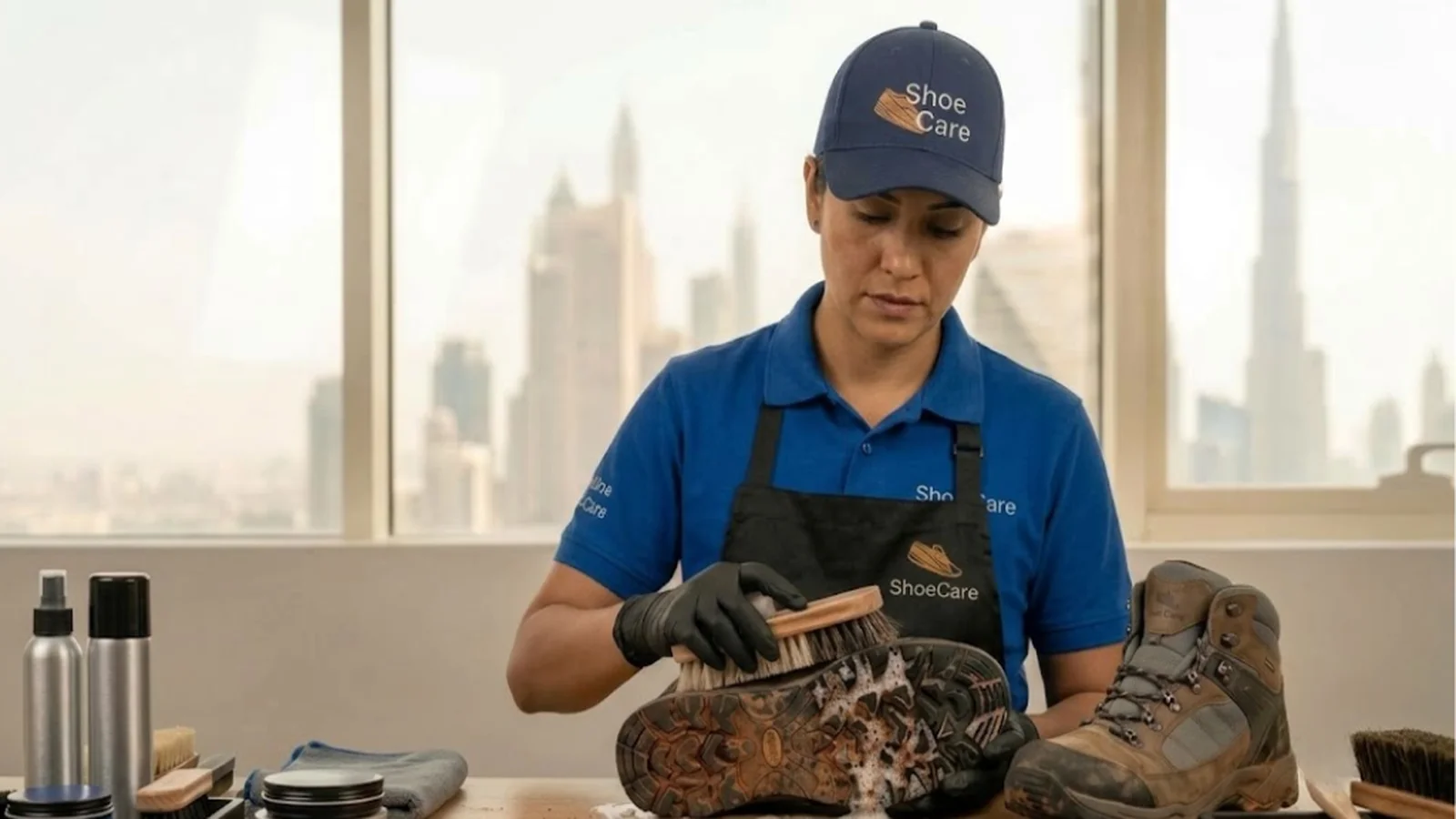
Professional Shoe Care
Need Expert Shoe Care?
Schedule a pickup and let ShoeCare handle deep cleaning, restoration, and protection for your shoes.
4.9 ★
Customer Rating
7,000+
Shoes Restored
Same Day
Pickup
In This Article
- 1Why cleaning hiking boots in Dubai is different
- 2How to clean hiking boots: the right order of steps
- 3How to clean smelly hiking boots
- 4Cleaning leather hiking boots
- 5Cleaning suede hiking boots
- 6Brand-specific notes: Merrell, Salomon, and Columbia
- 7Common mistakes when cleaning hiking boots in Dubai
- 8When to choose professional hiking boot cleaning
- 9Professional hiking boot cleaning by ShoeCare Dubai
- 10Hiking boots cleaning and repair pricing
- 11Conclusion
TL;DR
- This guide is for Dubai residents who hike trails like Hatta, Wadi Shawka, or Jebel Jais and need to know how to clean hiking boots properly in a desert climate.
- Dubai hiking boots deal with fine sand and dust rather than mud, which means the standard soak-and-scrub method used in global guides needs adjusting.
- Different materials (leather, suede, GORE-TEX membrane) and brands (Merrell, Salomon, Columbia) need slightly different care to avoid damaging waterproofing and adhesives.
- Desert heat is a significant long-term factor: excessive heat and direct sunlight can dry leather and affect adhesives over time.
- For deep interior odour removal, embedded sand, or any boot with visible membrane or sole damage, professional cleaning avoids the risk of DIY methods that can void waterproofing or loosen soles.
In Dubai, hiking boots are in a world of their own. Most cleaning guides are written for hikers returning from wet, muddy trails in temperate climates. Dubai hikers often return from Hatta, Wadi Shawka, or Jebel Jais with fine desert sand in the seams, dust embedded in the tread, and boots exposed to intense heat during the journey home.
The key to cleaning hiking boots properly in this climate is knowing what to adjust, rather than simply following standard routine. This guide covers the correct cleaning procedure for exterior sand and grit, interior odour, leather and suede hiking boots, brand-specific notes on Merrell, Salomon, and Columbia boots, and when the better option is professional care.
Also Read:
How to Clean Chelsea Boots in Dubai
How to Clean Timberland Boots in Dubai
How to Clean Birkenstock Sandals in Dubai
Why cleaning hiking boots in Dubai is different
Worldwide hiking boot guides make an assumption: the problem is wet weather. They discuss mud stuck to the shoes, wet leather, and trail moisture that needs managing during drying. Dubai's hiking environment requires a different approach.
Trails around Hatta and Fujairah are dry, rocky, and covered in fine sand and mineral dust. On each hike, that sand infiltrates stitching, eyelets, and the gap between the upper and sole. Unlike mud, it does not need soaking to soften. It must be brushed and shaken out before it works against the material with each step like sandpaper on leather and fabric.
The larger issue is what follows the hike. Boots that dry slowly in normal room air elsewhere will be exposed to significant temperature swings in Dubai: moving from outdoor heat directly into an air-conditioned car or home, or being left in a hot vehicle. Repeated exposure to intense heat can accelerate leather drying and may weaken adhesives over time. The combination of abrasive desert sand and heat-induced material breakdown is the real long-term problem here.
How to clean hiking boots: the right order of steps
Cleaning hiking boots properly means working through exterior, interior, and soles in the right sequence rather than soaking the entire boot. Following the wrong order can push dirt deeper into the material or trap moisture inside.
Remove laces and insoles first
Before anything else, take both out. This gives access to the eyelets and boot interior, and lets you clean laces and insoles separately without the cleaning process affecting other parts of the boot.
Remove loose sand and grit dry
Strike the soles together and brush firmly with a stiff brush before any water touches the boot. In Dubai, most of the trail dust will come off the tread grooves dry. This step matters because wetting sand that is already embedded pushes it deeper into seams rather than lifting it out.
Clean the exterior with a damp cloth or soft brush
Use lukewarm water and a small amount of appropriate mild soap on a cloth or soft brush. Avoid degreasers and harsh cleaning products. For leather hiking boots, keep this step brief as leather does not benefit from prolonged exposure to moisture.
Clean the sole tread separately
Work an old toothbrush or stiff-bristled brush through the lug pattern with water to dig out embedded sand and small stones. Grit left in the tread continues wearing down sole material between hikes and reduces grip on rocky surfaces.
Clean the interior carefully and sparingly
A damp cloth to wipe down the inside is usually sufficient. Avoid soaking the interior of any boot with a waterproof liner. Excessive moisture trapped against a GORE-TEX or similar lining takes far longer to dry in Dubai's temperature fluctuations than most people expect.
Dry away from heat
This is where most people make the mistake. Avoid direct sunlight, hot cars, radiators, and AC vents. Fast heat-assisted drying pulls moisture from leather unevenly, leading to stiffness and cracking, and can soften the adhesive bonds holding the sole in place. Dry boots naturally in a shaded, well-ventilated indoor area.
How to clean smelly hiking boots
Every hike in Dubai's heat produces significant sweat inside boots. If boots are stored closed without airing out between hikes, that moisture and bacteria build up quickly inside the lining.
Remove insoles completely and clean them separately in mild soapy water according to the manufacturer's instructions. Insoles absorb more sweat and bacteria than the boot shell and need their own treatment rather than being wiped down inside the boot.
For light odours, some people use a diluted white-vinegar solution or baking soda as a deodorising treatment. Check manufacturer care instructions first, particularly for leather, suede, and waterproof membrane-lined boots, then allow it to sit for a few minutes before wiping out. Sprinkling baking soda in each boot and leaving it overnight to absorb residual moisture and odour before tipping it out the next morning is a useful follow-up step.
If odour remains after surface cleaning and deodorising, it may have penetrated deeper into the lining. At that point home remedies cycle without solving it, and professional cleaning that reaches the interior materials is the more effective option.
Cleaning leather hiking boots
Full-grain and nubuck leather hiking boots need careful handling in Dubai's climate. Leather that dries out too fast loses flexibility and begins cracking at flex points around the toe and ankle, which is exactly what happens when boots are left in heat after a hike.
Wipe surface dirt off while it is still fresh rather than letting it dry and harden. Use a soft, barely damp cloth and avoid scrubbing hard, since aggressive brushing strips natural oils from the leather surface. Once clean, allow boots to dry naturally, then apply a compatible leather conditioner if recommended for the specific leather and waterproofing system used.
Skip household cleaning products entirely on leather hiking boots. Dish soap and general detergents strip natural oils and can leave leather brittle within a few cleaning cycles. This problem appears faster in Dubai's dry heat than in humid climates. If the manufacturer recommends reproofing after cleaning, apply a compatible waterproofing product according to both the product and boot manufacturer's instructions.
Cleaning suede hiking boots
Suede hiking boots are less common than leather but appear on lighter trail shoes and approach boots. Suede cannot be treated the same way as smooth leather. Excessive moisture can leave marks, while aggressive brushing on wet suede can flatten or alter the nap permanently.
Dry brushing is the primary cleaning method. Use a dedicated suede brush and work in one direction to lift dust and sand out of the nap without pressing it flat. For scuffs or stains, a suede eraser handles most surface marks without introducing moisture.
If sand has worked deep into the suede texture, resist using water to flush it out. Water-related marks on suede are difficult to remove, and Dubai's dry conditions make suede more prone to cracking if it gets wet and dries too quickly afterward. Embedded sand or staining in suede is one of the clearer cases where professional cleaning is the lower-risk option.
Brand-specific notes: Merrell, Salomon, and Columbia
Popular hiking brands use different combinations of leather, synthetic materials, membranes, and construction methods, so cleaning requirements vary by model.
Merrell: Some Merrell hiking boots use GORE-TEX or Merrell's own waterproofing technologies depending on the model. This membrane needs gentle handling. Avoid products not recommended by the boot or membrane manufacturer, as unsuitable conditioners or treatments can affect breathability. Stick to mild soap, water, and a soft brush, and avoid oil-based conditioner or polish on membrane-lined sections.
Salomon: Salomon hiking boots often use a mix of synthetic mesh and leather overlays, particularly on trail running style hiking shoes. Mesh sections handle water reasonably well, but leather overlay areas should get the same gentle, quick-wipe treatment as full leather boots. Salomon's Quicklace systems also collect sand in the lace channel, which is worth flushing out separately with a soft brush.
Columbia: Columbia hiking boots typically combine leather or synthetic uppers with a waterproof lining similar in principle to GORE-TEX. Columbia's care guidance recommends mild cleaning methods, avoiding harsh treatments and prolonged soaking. For Dubai conditions, add one adjustment: dry boots away from heat and direct sun rather than open-air drying, since Dubai's ambient heat alone is often intense enough to dry boots too fast and damage adhesives.
Common mistakes when cleaning hiking boots in Dubai
- Drying in direct sunlight or with concentrated heat. Fast drying pulls moisture from leather unevenly, causing stiffness and cracking, and can soften glue holding the sole in place. Dry in a shaded, well-ventilated indoor area.
- Machine washing. Generally not recommended for hiking boots unless the manufacturer specifically confirms that the particular model is machine washable. Detergent, heat, and spinning break down adhesive bonds, and the damage often only becomes visible when the sole starts separating weeks later.
- Storing boots after a hike without shaking out sand first. Abrasive grit trapped against the lining continues wearing down material even when boots are not in use.
- Using dish soap or general household cleaners on leather or suede. These strip protective oils and accelerate drying and cracking that Dubai's heat already speeds up.
When to choose professional hiking boot cleaning
Home cleaning handles routine dust and light sand. Some boots need professional care instead.
If boots with a waterproof membrane have become less water-resistant, clean them gently and follow the manufacturer's guidance for restoring the water-repellent treatment. Reproofing typically involves treating the outer material rather than the membrane itself, and using the wrong product can affect breathability or other materials.
Hiking boots with deeply embedded sand, stubborn stains, or contamination that cannot be removed safely with routine brushing benefit from professional cleaning. Suede nap in particular can be damaged by excessive moisture and rough brushing, making embedded staining a case where professional methods carry less risk than aggressive DIY.
Persistent odour after vinegar and baking soda treatment indicates the smell has penetrated deeper into the lining, requiring more thorough deodorisation than home methods can provide.
Repair problems such as a partially separated sole, loose stitching, or cracking leather are not cleaning problems. These should be addressed before a short hike becomes a boot failure on the trail.
Book Hiking Boot Cleaning in Dubai
Free pickup across Dubai within 4 hours. Material-matched cleaning for leather, suede, and membrane-lined hiking boots. Boots returned within 2 to 3 days with a Zero Stain Guarantee.
Schedule Free PickupProfessional hiking boot cleaning by ShoeCare Dubai
ShoeCare Dubai's boot cleaning service covers hiking boots using material-specific cleaning for leather, suede, and membrane-lined boots, including exterior cleaning, sole care, and interior deodorising. The service includes a Zero Stain Guarantee with free pickup and delivery across Dubai within 4 hours of booking and return within 2 to 3 days. For boots with sole separation, stitching issues, or cracked leather, the shoe repair service covers those alongside cleaning.
Hiking boots cleaning and repair pricing
| Service | Price (AED) |
|---|---|
| Boot Cleaning (leather, suede, or membrane-lined hiking boots) | 170 |
| Shoe Repair: Gluing (sole separation) | 55 |
| Sole Replacement | 275 |
| Sole Guard Installation | 85 |
Conclusion
Hiking boots in Dubai deal with sand and heat rather than mud and rain, which means standard global cleaning advice needs a local adjustment. Brushing out sand before it embeds, cleaning leather and suede with the right method, and drying boots away from heat sources are habits that keep boots functional trail after trail. Interior odour, embedded suede staining, and membrane-lined boots that need reproofing are cases where professional cleaning is worth it, since the wrong home method can damage waterproofing or adhesive bonds permanently. Book your hiking boot cleaning with ShoeCare Dubai for free pickup and return within 2 to 3 days.