
By ShoeCare Team - Posted on 2026-09-10 - 10 min read
How to Clean Patent Leather Shoes in Dubai: A Safe Guide
Patent leather's glossy coating behaves nothing like regular leather, and the most common home remedies damage it permanently. This guide covers safe home cleaning, what to avoid, how Dubai's heat affects the coating, and when professional care is the right call.
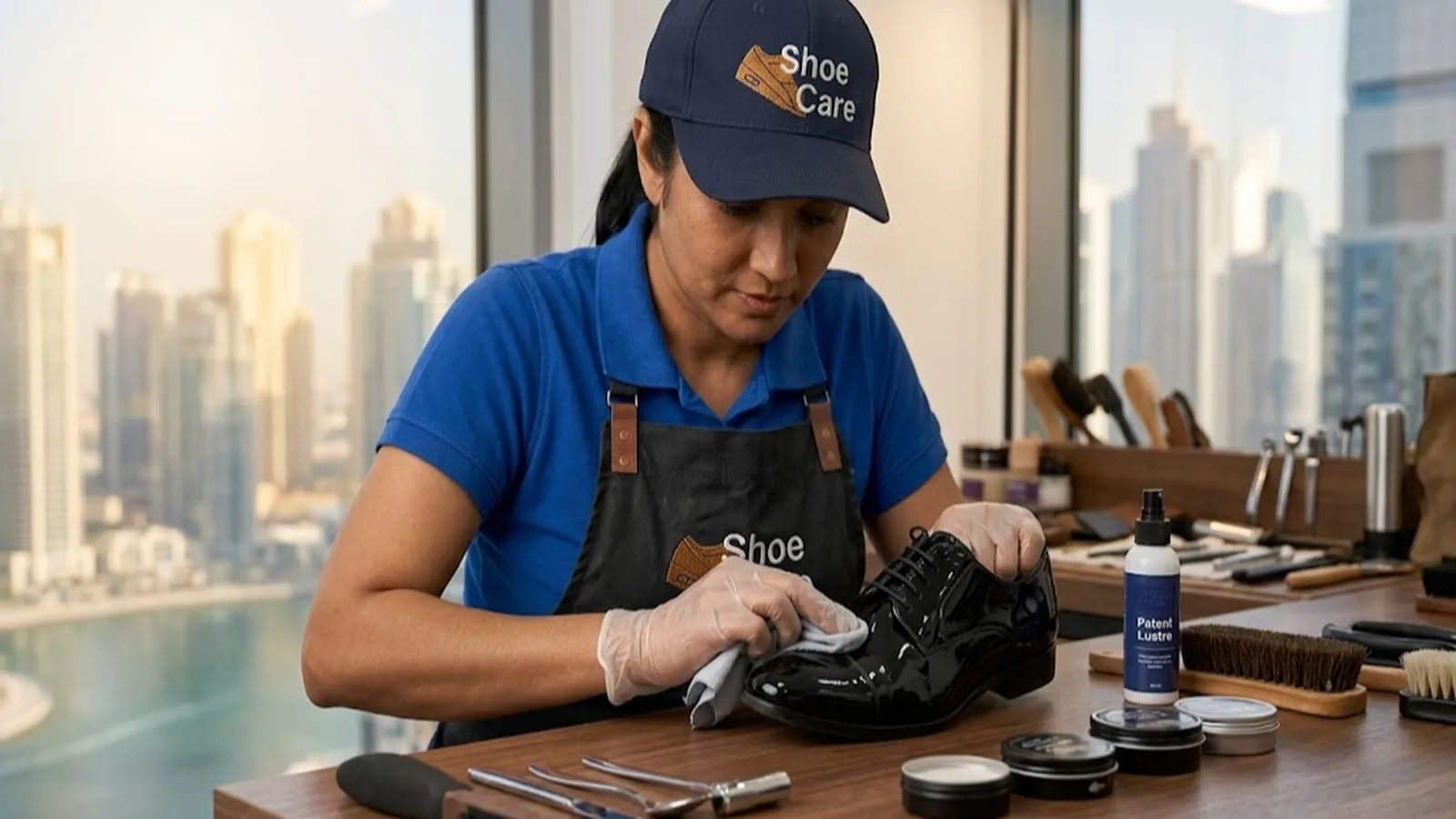
Professional Shoe Care
Need Expert Shoe Care?
Schedule a pickup and let ShoeCare handle deep cleaning, restoration, and protection for your shoes.
4.9 ★
Customer Rating
7,000+
Shoes Restored
Same Day
Pickup
In This Article
- 1What makes patent leather different from regular leather
- 2Step by step: how to clean patent leather shoes at home
- 3What not to use: the nail polish remover problem
- 4Treating white scuffs and marks on black patent leather
- 5Why Dubai's climate is especially hard on patent leather
- 6Storing patent leather shoes correctly in Dubai
- 7When to stop DIY and see a professional
- 8How professional patent leather cleaning works
- 9Patent leather cleaning pricing in Dubai
- 10Conclusion
TL;DR
- This guide is for Dubai residents who own black patent leather shoes, dress shoes, or heels and want to clean them safely without dulling or cracking the glossy coating.
- Patent leather has a sealed glossy surface coating over the base material. The coating determines how it should be cleaned, and treating it like regular leather risks permanent damage.
- Common home remedies including acetone nail polish remover and rubbing alcohol can damage or dull the glossy coating. A damp microfiber cloth and mild soap are among the safer options for routine cleaning.
- Dubai's intense heat is one of the biggest environmental risks. Temperatures inside a parked car in summer can reach levels that soften, cloud, or crack some patent finishes.
- Deep scuffs, tackiness, cloudy patches, or coating that has started to crack need professional assessment rather than repeated home attempts, since each failed DIY fix reduces what a specialist can later restore.
Patent leather looks different from regular leather because its glossy finish comes from a protective coating applied over the base material. That coating is what you need to protect while cleaning. Treat it like ordinary leather and you risk stripping the shine permanently.
This matters in Dubai because patent leather is exposed to extreme outdoor heat as well as heavily air-conditioned interiors. Repeated exposure to high temperatures and sudden temperature changes can increase the risk of softening, tackiness, cracking, or haze in some patent finishes. This guide covers how to clean patent leather shoes at home safely, which common home remedies damage the coating, how Dubai's heat and humidity affect patent finishes specifically, and when a scuff or stain has moved past what a microfiber cloth can fix.
Also Read:
How to Clean Chelsea Boots in Dubai
How to Clean Timberland Boots in Dubai
How to Clean Birkenstock Sandals in Dubai
What makes patent leather different from regular leather
Unlike untreated or more absorbent leather finishes, patent leather has a sealed glossy surface that behaves differently when exposed to conditioners, polishes, and other leather-care products. The shiny surface is a plastic-like film sealing off the material beneath it, so it absorbs nothing.
This changes the entire cleaning approach. Leather conditioner, saddle soap, and mink oil are all standard tools for regular leather care. On patent leather, they sit on top of the coating without absorbing anywhere. At best this wastes product. At worst it leaves a sticky, cloudy film that attracts dust and makes the shoe look dirtier than before you started.
The coating is also more rigid than the leather or fabric backing it. Bend patent leather sharply, expose it to sudden heat, or let it dry out and the coating can develop fine white cracks along crease lines, most commonly across the toe box where the shoe flexes with every step. Once these cracks form, they do not reverse with cleaning.
Step by step: how to clean patent leather shoes at home
Patent leather is easy to clean for regular dirt, dust, and light surface stains if you use the right materials.
Step 1: dry wipe first
Use a soft, dry microfiber cloth to remove loose dust and dirt. Wipe in one direction rather than scrubbing. Pay attention to seams and the join between sole and upper, where dust and sand can get trapped and potentially scratch the coating if not removed before adding moisture.
Step 2: damp cloth clean
Dampen a clean cloth with lukewarm water and wring it out so it is not soaking. Wipe the entire shoe a little at a time. If dirt does not come off easily, add a very small amount of mild soap to the damp cloth and gently wipe the affected area. If available, use a cleaner specifically formulated for patent leather.
Step 3: dry immediately
Dry the shoes right away with a separate clean microfiber cloth. Leaving moisture on the surface too long may contribute to clouding or other finish problems, particularly in humid conditions.
Step 4: shine restoration (only if needed)
If the manufacturer recommends it, apply a small amount of a product specifically formulated for patent leather and buff gently with a soft cloth. If shoes are already shiny, skip this step entirely. It is more common to over-treat patent leather than to under-treat it.
What not to use: the nail polish remover problem
A significant amount of advice online recommends nail polish remover, rubbing alcohol, or hand sanitiser to remove scuffs from patent leather. This advice is common, and it is wrong for any pair you plan to keep wearing.
Nail polish remover may contain acetone or other strong solvents that can damage patent finishes, not just the scuff sitting on top. The scuff may disappear, but so does a thin layer of the glossy coating underneath, leaving a dulled patch that catches light differently from the rest of the shoe. Once the glossy coating itself has been damaged, routine cleaning or conditioning generally cannot restore the original finish.
The same applies to acetone-based cleaning wipes, bleach, and most multi-surface household cleaners, which are formulated to break down coatings and finishes rather than protect them. Products designed to remove paint, varnish, nail polish, or other coatings may contain solvents that damage patent leather and should not be used unless specifically approved for the finish.
Safe alternatives for genuine scuffs are narrower than most guides suggest. A barely damp microfiber cloth removes the majority of surface scuffs, since most marks on patent leather are transfer marks sitting on top of the glossy surface rather than damage to it. For minor marks that do not lift with water, some leather-care specialists suggest a very small amount of petroleum jelly worked gently into the mark and buffed away, but only after patch-testing on an inconspicuous area first.
Treating white scuffs and marks on black patent leather
Light-colored scuffs from walls, curbs, or other shoes are particularly visible against black patent leather's glossy surface. Most of them are transfer marks, not actual damage, and will not penetrate the coating.
Wipe them gently with a damp cloth first before assuming they are permanent. Most of what looks like a stubborn scuff lifts easily with water and light pressure.
If a mark persists, a very small amount of petroleum jelly on a cotton swab, worked gently into the mark and then buffed away with a dry cloth, may help with some remaining surface marks. Avoid rubbing back and forth, which can create a visible haze on black patent leather even when it would not on lighter colours. Circular motions with light pressure work more evenly.
Marks that remain after both attempts are worth stopping on rather than escalating to stronger products. Repeated scrubbing with household cleaners at this stage is what turns a visible but fixable scuff into a permanently dulled patch, and this is the point where professional assessment is the safer next move.
Why Dubai's climate is especially hard on patent leather
Some patent leather coatings soften or become tacky when exposed to excessive heat. This is particularly relevant in Dubai, where temperatures inside a parked car can become extremely high during summer and may affect heat-sensitive finishes.
Leave patent leather shoes in a hot car, on a sun-facing balcony, or near a window during peak summer heat, and the coating can soften enough to develop a tacky surface, stick to whatever it is touching, or set with fine surface cracks once it cools. Heat-related changes can sometimes be mistaken for ordinary wear, particularly after prolonged exposure to very high temperatures.
Frequent movement between heavily air-conditioned interiors and Dubai's hot outdoor environment exposes patent leather to repeated temperature changes. Over time, these fluctuations can contribute to changes in the finish and increase the risk of cracking at areas that flex frequently.
Coastal humidity adds a second layer of risk. Shoes worn or stored near Dubai Marina, JBR, or other waterfront areas are exposed to humid, salt-laden air that may contribute to surface clouding or finish deterioration, particularly in combination with heat and poor storage conditions.
Storing patent leather shoes correctly in Dubai
Storage mistakes account for a large share of patent leather damage that has nothing to do with wear. Store patent leather shoes in a cool, dry place away from direct sunlight and any heat source, including radiators, sun-facing shelving, or a closet wall that gets warm from outdoor heat during the day.
Use breathable dust bags rather than sealed plastic containers. Plastic traps residual moisture against the coating, and in Dubai's humidity this is a faster route to stickiness and clouding than leaving shoes uncovered on an open shelf. If storing multiple pairs, keep patent leather shoes separated with a soft cloth or divider rather than stacked directly against each other, since the coating can transfer or stick to another glossy surface under sustained pressure or warmth.
Never store patent leather shoes while still damp from cleaning or from being worn in rain. Trapped moisture contributes to odours, clouding, and coating deterioration over time.
When to stop DIY and see a professional
Patent leather rewards careful, minimal cleaning and punishes anything more aggressive, making it one of the least forgiving materials for trial-and-error home fixes.
Visible cracking in the coating cannot be corrected through routine cleaning or conditioning, since the coating itself has physically separated. Continuing to clean or apply product over cracked patent leather does not help and can push moisture into the crack, worsening it over time.
Tackiness or a cloudy, hazy patch that does not clear with a dry buff usually means the coating has started to break down from heat or an incompatible product rather than simply being dirty. At this stage, more cleaning attempts tend to spread the affected area rather than resolve it.
Deep scuffs that remain visible after a careful attempt with water and petroleum jelly are often past what home methods can safely address without risking the surrounding coating. This is particularly true for designer patent leather, where the cost of a mistake is considerably higher than the cost of professional assessment.
Book Patent Leather Cleaning in Dubai
Free pickup across Dubai within 4 hours. Patent-specific cleaning assessment before treatment. Shoes returned within 2 to 3 days with a Zero Stain Guarantee.
Schedule Free PickupHow professional patent leather cleaning works
At ShoeCare Dubai, patent leather is assessed for coating condition before any treatment begins, since the right approach for light surface grime differs from what a tacky, heat-affected coating needs. Specialists use patent-specific cleaning agents rather than general leather products, and every pair is handled individually rather than run through a one-size-fits-all process.
Designer sneaker and designer formal shoe cleaning covering patent leather dress shoes and heels is priced at AED 145 and includes assessment, cleaning, and finish restoration where the coating condition allows. Formal shoe cleaning for non-designer pairs is AED 110. Both services include free pickup and delivery across Dubai, with pickup available within 4 hours and shoes returned within 2 to 3 days. For shoes with cracked coating, separated soles, or other structural issues, the shoe repair service is assessed alongside cleaning.
Patent leather cleaning pricing in Dubai
| Service | Price (AED) |
|---|---|
| Formal Shoe Cleaning (non-designer, includes patent leather) | 110 |
| Designer Formal Shoe Cleaning (patent leather dress shoes, heels) | 145 |
| Shoe Repair: Gluing (sole separation) | 55 |
| Heel Tip Replacement | 55 |
Conclusion
Patent leather's glossy finish comes from a coating that behaves completely differently from regular leather, which means standard leather-care products and common home remedies often cause the damage they are meant to fix. A damp microfiber cloth handles most routine cleaning safely. Dubai's heat and temperature swings make storage and handling more critical than in most other climates, and visible coating damage or persistent tackiness are signs to stop home treatment rather than escalate it. For stubborn marks, heat-affected finishes, or designer patent leather where the risk of a mistake is high, book a professional clean with ShoeCare Dubai for assessment before treatment rather than after the coating has worsened.