
By ShoeCare Team - Posted on 2026-07-24 - 9 min read
How to Waterproof Your Shoes in Dubai's Climate
Waterproofing shoes in Dubai isn't just for rainy days. Heat, humidity cycling, and desert sand all break down unprotected footwear faster than most guides account for. Learn which spray suits your material and how often to reapply.
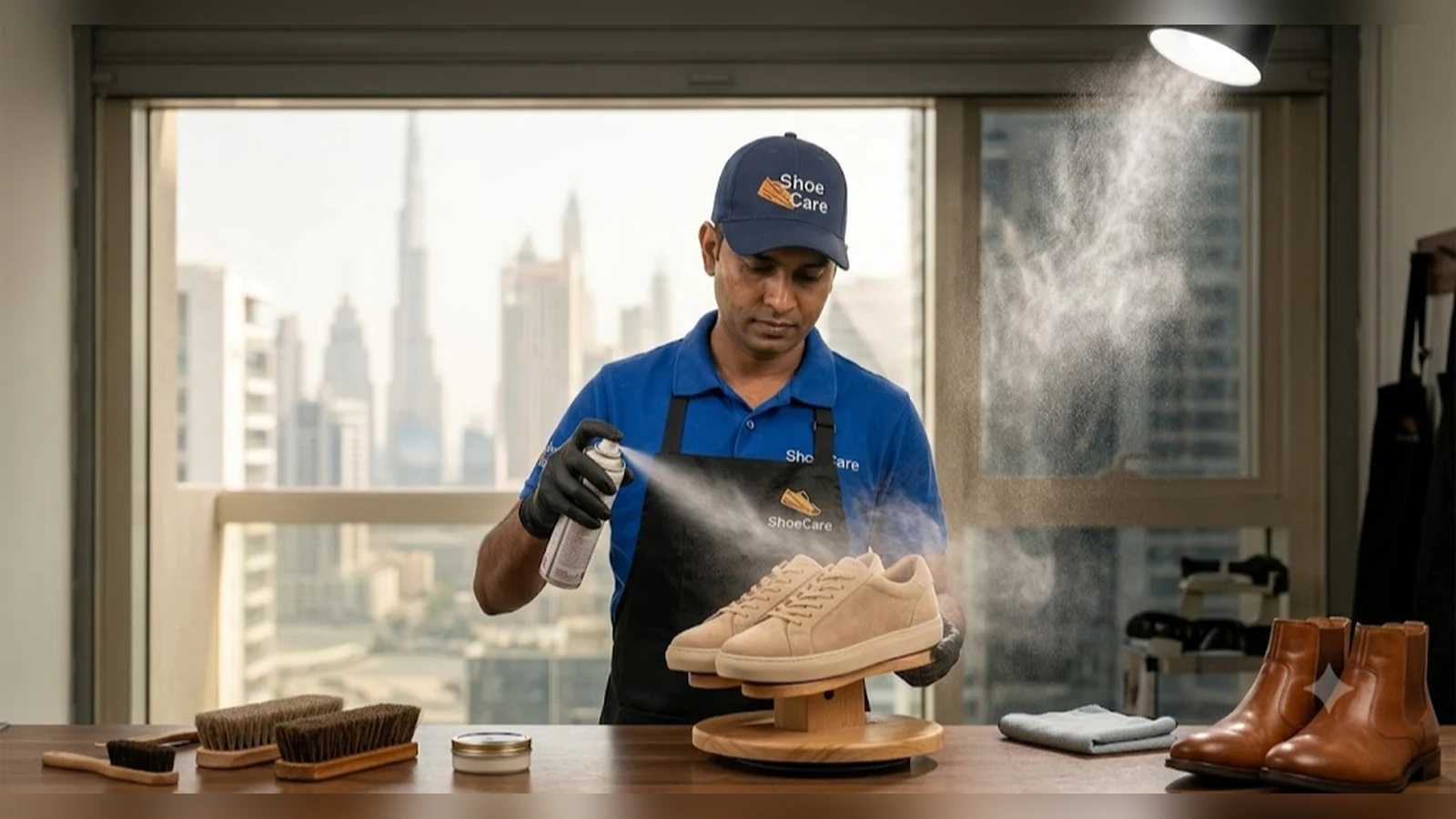
Professional Shoe Care
Need Expert Shoe Care?
Schedule a pickup and let ShoeCare handle deep cleaning, restoration, and protection for your shoes.
4.9 ★
Customer Rating
7,000+
Shoes Restored
Same Day
Pickup
In This Article
- 1Why Dubai's Climate Makes Waterproofing More Necessary, Not Less
- 2How Waterproof Sprays Actually Work
- 3Choosing the Right Waterproofing Method by Material
- 4Step-by-Step: How to Waterproof Shoes at Home
- 5How Often Should You Reapply Waterproofing in Dubai
- 6Common Waterproofing Mistakes That Damage Shoes
- 7When DIY Waterproofing Is Not Enough
- 8Why Professional Shoe Care Is the Safer Choice for Valuable Footwear
- 9Conclusion
- Dubai's climate damages shoes through more than rain: humidity cycling, extreme heat, and desert sand all break down unprotected footwear.
- The right waterproof spray depends entirely on material. Leather, suede, canvas, and mesh sneakers each need a different product and technique.
- Reapply waterproofing every four to six weeks in Dubai, not every few months as international guides suggest, because heat and UV break down coatings faster here.
- DIY waterproofing works for routine protection, but suede, designer shoes, and pairs with existing water damage are safer with professional treatment.
Dubai rarely gets much rain, but when it does, it arrives as a sudden downpour with little warning. Most people only think about waterproofing their shoes after water has already saturated them. By then, the damage is done. Preparing shoes in advance, before the next unexpected storm or humid afternoon walk through sand, is what actually saves footwear here.
This guide explains how waterproofing works, why it matters more in Dubai than most guides acknowledge, which spray to use based on shoe material, and how often to reapply given the city's unique conditions.
Why Dubai's Climate Makes Waterproofing More Necessary, Not Less
Many people assume that because Dubai receives very little rainfall, waterproofing shoes is unnecessary. That assumption is misleading, because rain is only one of several factors that damage shoes in this environment.
Short, intense rainfalls in Dubai happen quickly and with little warning. Streets and car parks can flood before they have time to drain, leaving people wading through standing water even on days described as having light rain. A single exposure is enough to permanently stain leather or damage suede in ways that are difficult to reverse. Our guide to cleaning leather shoes in Dubai covers how professionals handle water-damaged leather once the harm has been done.
Beyond rain, there is a separate problem: humidity cycling. Moving from a super-cooled mall or office into outdoor heat of 40 degrees or more causes condensation to form repeatedly inside footwear throughout the day. Without a water-repellent barrier, that moisture penetrates the material directly, weakening adhesives and encouraging mildew to develop inside closed shoe cabinets over time.
Then there is desert sand. It does not just settle on the surface. It works into stitching, mesh uppers, and the nap of suede, and when combined with moisture it accelerates wear on shoe materials considerably. Waterproof coatings also make it harder for damp sand to cling to shoe surfaces, reducing long-term abrasion. Very few international waterproofing guides mention this because few climates combine sand, humidity, and extreme heat the way Dubai does.
How Waterproof Sprays Actually Work
Waterproof sprays do not make shoes completely waterproof. What they do is create a temporary water-repellent barrier that causes moisture to bead up and roll off the surface rather than absorbing into the material. This is known as a durable water-repellent (DWR) coating.
Most shoes worn daily are not built with waterproof membranes the way technical hiking boots are. A waterproof spray provides temporary protection and needs regular reapplication as the coating wears down from use, heat, and UV exposure.
The chemistry of the spray also matters. Silicone-based formulas provide strong water resistance but can reduce breathability and cause slight stiffness on some synthetic fabrics. Fluoropolymer and wax-based formulas work well on breathable fabrics and suede but may need more frequent reapplication in Dubai's conditions. Choosing the right spray for your shoe material matters as much as using any spray at all.
Choosing the Right Waterproofing Method by Material
Treating every shoe the same way is the most common DIY waterproofing mistake, and it is where most damage occurs. The correct product and technique depends entirely on the material.
Leather Shoes and Boots
Smooth leather needs two preparation steps before waterproofing. First, clean the leather thoroughly to remove dirt and sand residue. Then condition it to ensure it is not dry before spraying. Apply a waterproofing spray specifically formulated for smooth leather, holding the can 20 to 30 centimetres from the surface and using thin, even layers. Avoid wax-based dubbing on light-coloured leather, as it can darken or alter the finish. This matters especially for the formal leather shoes worn throughout Dubai's business districts.
Suede and Nubuck
Suede and nubuck require a dedicated suede and nubuck spray. Never use a general leather or silicone product on these materials, since standard formulas will flatten the nap and darken the material permanently. Apply in a well-ventilated space, hold the can approximately 15 centimetres from the surface, and use light, sweeping passes rather than concentrating spray on a single spot. Once dry, brush the nap gently to restore its texture.
Canvas and Fabric Sneakers
Canvas holds up well with sprays designed for fabric or suede, though it is worth checking the label for silicone content. Some silicone formulas do not bond evenly with canvas fibres and can leave patchy, uneven results. Two to three light coats, each fully dried before the next is applied, gives more even coverage than one heavy application.
Mesh and Performance Sneakers
Mesh uppers on running and sports shoes need a breathable waterproofing spray rather than a heavy leather formula. A thick coating can block the ventilation that mesh is designed to provide, and in Dubai's heat, trapped moisture inside a shoe creates its own separate problem. For professional cleaning and treatment of performance footwear, see our sneaker cleaning service in Dubai.
Step-by-Step: How to Waterproof Shoes at Home
Once you have the right product for the material, the application process follows a similar format regardless of shoe type.
- Clean and dry thoroughly first. Spraying over dirt, sand, or sweat residue seals grime against the material rather than protecting it. Remove laces if possible to ensure even coverage on the tongue and eyelets.
- Shake the can well and spray from the correct distance. Hold the can at the distance the product specifies, typically 15 to 30 centimetres, and use slow, even sweeps rather than saturating a single spot.
- Apply two or three thin coats. Allow each coat to dry fully before applying the next. Multiple light layers bond more evenly and last longer than a single heavy application that pools and dries unevenly.
- Dry away from direct heat and AC vents. Rapid surface drying from sunlight or an AC vent can prevent the coating from curing evenly because lower layers may still be wet. Dry at room temperature in a shaded spot.
- Test with a few drops of water. If water beads up and rolls off, the waterproofing has bonded correctly. If it starts to soak in, apply another light coat after the shoe has fully dried.
How Often Should You Reapply Waterproofing in Dubai
International guides typically recommend reapplying waterproofing spray every few months or after a set number of wears. That schedule is too infrequent for Dubai.
Most DWR coatings degrade faster under extended heat and UV exposure than they do in temperate climates. For shoes worn outdoors regularly in Dubai, reapplication every four to six weeks is more appropriate. Shoes worn near coastal areas such as Dubai Marina or JBR face additional salt air exposure, which accelerates the breakdown of protective coatings further.
A simple bead test is a more reliable guide than a fixed schedule. If a few drops of water bead up on the surface and roll off, the coating is still effective. If water starts to soak in, the shoes need reapplication even if it has been fewer than four weeks since the last treatment.
Common Waterproofing Mistakes That Damage Shoes
A few specific errors account for most waterproofing complaints, and nearly all of them are avoidable.
Spraying over dirty or sandy shoes seals grime against the material rather than protecting it. Trapped dirt continues to abrade the surface from underneath the coating, causing damage that is not visible until later.
Using a generic silicone spray on suede is one of the most frequent mistakes. It mats the nap and often darkens the material in blotchy, uneven patches that cannot be corrected without professional intervention.
Applying spray too close to the shoe, or too heavily in a single pass, causes pooling that dries unevenly and can leave a visible film, particularly on darker leather and formal footwear.
Drying shoes in direct sunlight or directly in front of an AC vent are both common instincts in Dubai that cause problems. Rapid drying prevents the coating from curing evenly, and on leather, it can lead to cracking as the material dries faster than the spray can bond to it.
When DIY Waterproofing Is Not Enough
Home waterproofing works well for routine, preventative care of shoes that are in good condition. Some situations call for more.
Suede and nubuck pose the greatest risk for DIY treatment, since damage from a mismatched product or technique is often irreversible without professional help. For high-value footwear including designer shoes and luxury sneakers, the cost of a waterproofing mistake typically exceeds the cost of professional care by a significant margin.
If shoes already show signs of water damage, such as slight discolouration, stiffening, or faint tide marks, applying waterproofing spray over the damage will seal the problem in rather than fix it. The underlying condition needs to be treated and the material properly restored before any protective coating is applied.
Why Professional Shoe Care Is the Safer Choice for Valuable Footwear
At ShoeCare Dubai, every pair is inspected before treatment so the appropriate cleaning, conditioning, and waterproofing method can be selected based on its material and current condition. For designer footwear and suede shoes, there is very little room for error, and a professional assessment before treatment significantly reduces the risk of a costly and often irreversible mistake.
Professional waterproofing is especially worthwhile for valuable footwear or shoes showing early signs of water damage, since specialists can clean and restore the material before applying protection. ShoeCare also offers free pickup and delivery across Dubai, with same-day pickup available in many areas.
Sports sneaker cleaning starts at AED 95, casual sneaker cleaning at AED 120, designer sneaker cleaning at AED 145, and formal shoe cleaning at AED 110. Shoes are cleaned, treated, and returned within 2 to 3 days.
Conclusion
Waterproofing shoes in Dubai is not only for rainy days. It is protection from an environment of sudden downpours, intense heat, humidity shifts, and fine desert sand that many international guides do not account for. Choosing the right waterproof spray for your material, applying it correctly, and reapplying it more frequently than temperate-climate recommendations suggest will keep your shoes well protected against water and moisture.
While DIY waterproofing works well for routine maintenance, professional treatment is the safer choice for suede shoes, designer footwear, and shoes that have already suffered water damage or prolonged moisture exposure. Professionals assess the material and its condition before restoring and waterproofing the shoes. If your shoes need professional treatment before the next storm, ShoeCare Dubai offers a free pickup service to get them treated right.
Protect Your Shoes Before the Next Dubai Downpour
Free pickup across Dubai. Cleaned, treated, and returned in 2 to 3 days.
book shoe waterproofing in Dubai