
By ShoeCare Team - Posted on 2026-11-02 - 10 min read
How to Clean Shoelaces Without Yellowing Them
Why white shoelaces turn yellow, how to clean each lace material, a step-by-step wash, whitening with oxygen bleach instead of chlorine bleach, and how to dry laces in Dubai's heat.
Professional Shoe Care
Need Expert Shoe Care?
Schedule a pickup and let ShoeCare handle deep cleaning, restoration, and protection for your shoes.
4.9 ★
Customer Rating
7,000+
Shoes Restored
Same Day
Pickup
In This Article
- 1Why do white shoelaces turn yellow?
- 2What are your shoelaces made of?
- 3What do you need to clean shoelaces at home?
- 4How to clean shoelaces step by step
- 5How do you clean white shoelaces with oxygen bleach?
- 6Why should you avoid chlorine bleach on shoelaces?
- 7Can you machine wash shoelaces?
- 8How should you dry shoelaces without yellowing them?
- 9How do you clean coloured, leather and waxed laces?
- 10How can you stop shoelaces from yellowing again?
- 11When should you replace laces instead of cleaning them?
- 12Is it worth cleaning shoelaces at home?
- 13Sneakers need more than fresh laces?
Knowing how to clean shoelaces properly keeps a pair of shoes looking fresh. Laces collect sand, sweat and everyday dust, and they are often the first part of a shoe to show wear. Clean white laces can lift an otherwise clean pair, while dull ones make it look neglected. The right method depends on the lace material, the detergent you use and how you dry them.
The problem is especially visible in Dubai, where heat, sweat and fine desert dust speed up dirt build-up and discolouration. Detergent residue left in the weave, combined with drying under strong midday sun, is one of the most common reasons laces come out cream-coloured instead of white.
This guide explains what makes laces yellow, how to identify what yours are made of, and how to clean shoelaces so they stay white after washing.
Also read: bag cleaning in Dubai: cost and what's included, suitcase repair in Dubai: wheels, handles and zips, and how to stretch tight shoes at home in Dubai.
Why do white shoelaces turn yellow?
Yellowing is rarely caused by one thing. It usually comes from a mix of chemistry, residue and heat, and knowing the cause tells you which fix to use. The main culprits are:
- Chlorine bleach on synthetic fibres. Sodium hypochlorite can damage or discolour polyester and nylon laces, sometimes permanently. Cotton laces also weaken with repeated exposure.
- Detergent residue. Soap left in the weave attracts dirt and oxidises, giving laces a dull, cream tone.
- Sweat and body oils. Laces absorb sweat, salts and skin oils during wear, and these residues attract dirt and discolour over time.
- Heat and UV light. Drying laces near heaters or in strong sun weakens fibres and sets yellow tones.
- Damp storage. Shoes kept in damp, poorly ventilated spaces develop odours, and prolonged moisture affects the laces too.
In Dubai, sweat salt build-up and heat exposure matter most. Laces worn through a summer commute and then dried in direct midday sun often yellow faster than the same laces would elsewhere.
What are your shoelaces made of?
The material decides which cleaner is safe, so check it before soaking anything.
- Cotton laces are common on canvas sneakers and classic court shoes. They absorb water and clean well with a mild detergent, and white cotton laces can usually take an oxygen bleach soak.
- Polyester and nylon laces are used on running shoes and most modern sneakers. Both dry quickly, but nylon is particularly vulnerable to chlorine bleach, and dyes or finishes on synthetic laces can react to harsh products.
- Leather and suede laces should never be soaked or bleached. Clean them with a suitable leather or suede cleaner, and use a slightly damp cloth only if the care guidance allows it.
- Waxed laces are common on dress shoes and boots. Soaking or aggressive washing strips the wax, so gentle surface cleaning is the safer choice.
Before cleaning, test your diluted solution on a small, hidden section of the lace. If there is no colour change or damage, carry on.
What do you need to clean shoelaces at home?
The supplies are simple and cheap. Gather them first so the laces do not sit wet and half-cleaned.
- A bowl of warm water, not hot
- A mild liquid detergent or dish soap, ideally clear and fragrance-free
- Oxygen bleach (sodium percarbonate) or 3% hydrogen peroxide for white laces
- A soft toothbrush or small soft-bristle brush
- A clean microfibre cloth or towel
- A mesh laundry bag if you plan to use the washing machine
Skip anything labelled chlorine bleach, and avoid coloured or heavily scented detergents. Dye and fragrance residue are common reasons for patchy, off-white laces.
How to clean shoelaces step by step
This basic wash removes dust, sweat and surface dirt, and it is the right starting point for every washable lace. Whitening comes after it.
Step 1: Remove the laces and brush off loose dirt
Pull the laces completely out of the shoe, shake them out and brush them dry to knock off sand and dust. In Dubai, fine desert dust works into the weave, and soaking laces without brushing first turns it into a grey film.
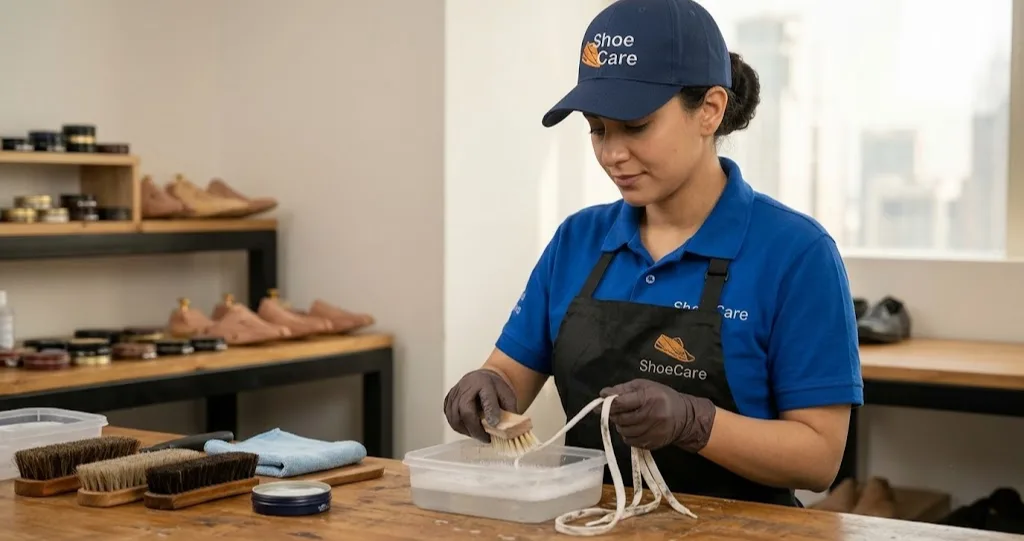
Step 2: Soak in warm soapy water
Fill a bowl with warm water and add a small squeeze of mild detergent. Submerge the laces and leave them for 15 to 30 minutes. This loosens sweat, oils and dirt so the scrubbing can be gentle.
Step 3: Scrub the stained sections
Lay the laces on a towel and scrub gently with a soft brush along their length. Pay extra attention to the sections near the eyelets, where grime collects. For stubborn marks, rub the lace against itself instead of pressing harder with the brush.
Step 4: Rinse until the water runs clear
Rinse under cool running water, squeezing the laces end to end until no suds appear. Most people cut this step short, and it is the most common reason laces look dull or cream after drying.
How do you clean white shoelaces with oxygen bleach?
If white laces are still grey, dingy or slightly yellow after a basic wash, oxygen bleach is the next step. It releases oxygen in water that helps lift stains and brighten suitable fabrics. Check the product instructions and the lace care guidance first, test a hidden section, and never use it on leather, suede or waxed laces.
- Mix oxygen bleach with warm water in a clean basin, following the ratio on the pack.
- Submerge the washed laces fully and keep them under the water.
- Leave them to soak for 30 minutes to 2 hours, checking occasionally.
- Remove them, gently brush any remaining marks and rinse thoroughly.
Warm water speeds up the reaction, but very hot water can damage synthetic fibres, so keep it comfortably warm. For stubborn yellowing, repeat the treatment as the product instructions allow rather than stretching one soak beyond the recommended time.
Can hydrogen peroxide whiten laces instead?
Yes. For white cotton or synthetic laces, diluted 3% hydrogen peroxide can lift mild stains and brighten the fabric. Follow the product's dilution and contact-time instructions, test a hidden section first and rinse thoroughly afterwards. Avoid it on coloured, dyed, leather or delicate laces. Hydrogen peroxide and oxygen bleach both work by oxidation, but their strength and formulation differ.
What about baking soda?
A paste of baking soda and water lifts surface dirt and neutralises odour, so it suits laces that are dirty rather than yellowed. It is a cleaner, not a whitener, so use it as a pre-treatment before an oxygen soak.
Why should you avoid chlorine bleach on shoelaces?
Chlorine bleach looks like a quick fix for white laces, but it can damage fibres, dyes and fabric finishes. On nylon and some polyester laces it can cause permanent yellowing, and repeated use on cotton weakens the fibres until the laces turn rough, brittle and start to fray.
It is also a safety risk. Never mix chlorine bleach with vinegar, ammonia, acids or other cleaning products, including oxygen bleach, because dangerous gases or reactions can occur. Even on cotton laces, avoid chlorine bleach unless the manufacturer's care instructions specifically allow it. Oxygen bleach is the gentler option for whitening.
Can you machine wash shoelaces?
Yes, for washable cotton, polyester and nylon laces when the care instructions allow it. It works best for lightly soiled laces that do not need special treatment.
Put the laces in a mesh laundry bag or a zipped pillowcase so they do not tangle or catch in the drum, and wash on a gentle cycle with a small amount of mild detergent alongside similar colours. Skip fabric softener, which leaves a coating that traps dirt and dulls the laces. If they still look grey afterwards, finish with a hand soak in oxygen bleach.
How should you dry shoelaces without yellowing them?
Drying is where many clean laces get ruined. Too much heat or long exposure to direct sun can discolour and weaken them.
- Air dry in the shade. Hang the laces over a rack or lay them flat on a clean towel in a ventilated indoor spot. An air-conditioned room helps reduce moisture.
- Avoid direct sunlight. In Dubai, midday sun on a balcony is strong enough to scorch fibres and set residue.
- Avoid tumble dryers and heaters. High heat can shrink laces and cause yellowing, especially on synthetics.
- Make sure they are fully dry before relacing. Damp laces threaded into a closed shoe cause musty smells and yellow marks near the eyelets.
How do you clean coloured, leather and waxed laces?
Some materials cannot take a soak, so match the method to the lace.
- Coloured laces: skip chlorine bleach and whitening treatments unless the product says it is safe for colours. Wash with mild detergent in cool or lukewarm water and air dry out of direct sun.
- Black laces: treat them like coloured laces. Use mild detergent and lukewarm water, avoid bleach and harsh products that cause fading, test a small section first and do not try to whiten them.
- Leather laces: wipe with a slightly damp cloth and a suitable leather cleaner if needed, then apply a leather conditioner where recommended. Do not soak.
- Waxed laces: a full soak strips the wax and leaves them frayed and stiff. Wipe them with a damp cloth and a tiny drop of soap instead.
How can you stop shoelaces from yellowing again?
Prevention takes less effort than repeated whitening, and a few habits keep clean laces clean.
- Wash laces every two to four weeks if the shoes are worn regularly, or whenever they pick up visible dirt.
- Rinse thoroughly every time. Detergent residue is the quiet cause of most slow yellowing.
- Dry completely in the shade after cleaning, and after wearing shoes in damp conditions.
- Remove the laces when you clean your shoes, so dirt and cleaning solution do not soak into the weave.
- Store shoes in a dry, ventilated space, away from direct sun and not sealed in plastic.
- Rotate pairs, so each one gets a day to air out and sweat does not build up in the laces.
For white sneakers living in Dubai's heat, a quick wipe of the laces with a damp cloth after a dusty or sweaty day prevents most set-in marks. If the shoes themselves are yellowing too, our guide on why white sneakers turn yellow and how to fix it covers the uppers and soles.
When should you replace laces instead of cleaning them?
Cleaning has limits. Replace laces when:
- the ends are frayed or the aglets (plastic tips) are cracked or missing
- they stay stiff and rough after washing
- yellowing remains after two oxygen soaks, which points to a permanent chemical change
- the fibres look thin or stretched
New laces are cheap, and fitting a fresh white pair is usually quicker than three rounds of whitening. If the shoes are also heavily stained, scuffed or yellowed in the midsole, the laces are only part of the problem. Professional shoe cleaning deals with the whole pair: ShoeCare offers sports sneaker cleaning for AED 95 and casual sneaker cleaning for AED 120, with free pickup and delivery across Dubai.
Is it worth cleaning shoelaces at home?
Yes, for most pairs. A basic wash costs almost nothing, takes well under an hour of actual effort and extends the life of your laces considerably. The key points:
- Check the lace material before choosing a cleaner.
- Whiten with oxygen bleach or hydrogen peroxide, never chlorine bleach on synthetics.
- Rinse until the water runs completely clear.
- Dry in the shade, away from heat and direct sun.
- Replace laces that stay discoloured or start to fray.
With the right method, cleaning white shoelaces becomes a small routine rather than a recurring problem.
Sneakers need more than fresh laces?
Stained uppers, yellowed soles and everyday grime are handled by hand at ShoeCare, with free pickup and delivery across Dubai. Sports sneaker cleaning from AED 95.
Book a free sneaker pickup in Dubai