
By ShoeCare Team - Posted on 2026-10-14 - 8 min read
How to Stretch Tight Shoes at Home in Dubai: Safe Methods That Work
Safe at-home methods to stretch tight leather shoes, sneakers and boots in Dubai. Covers shoe stretchers, stretching sprays, common mistakes, and when to go professional.
Professional Shoe Care
Need Expert Shoe Care?
Schedule a pickup and let ShoeCare handle deep cleaning, restoration, and protection for your shoes.
4.9 ★
Customer Rating
7,000+
Shoes Restored
Same Day
Pickup
In This Article
- 1Can Every Pair of Tight Shoes Be Stretched?
- 2How to Stretch Leather Shoes at Home
- 3How to Stretch Shoes With a Shoe Stretcher
- 4How to Stretch the Width of Shoes
- 5Can You Stretch Shoes Quickly?
- 6Does the Freezer Method Work?
- 7What Mistakes Damage Shoes When Stretching at Home?
- 8Shoes Still Too Tight After Home Stretching?
- 9When Should You Use Professional Shoe Stretching in Dubai?
- 10Shoe Stretching Pricing at ShoeCare Dubai
- 11How Do You Prevent Tight Shoes in the Future?
Shoes that feel tight around the toe box or instep may become more comfortable with gentle stretching, depending on their material and construction. The key is to choose a suitable method for the shoe rather than applying excessive force.
Dubai's heat can contribute to foot swelling, making shoes feel tighter at certain times of day. Leather shoes should be stored away from excessive heat and direct sunlight, and cared for according to the manufacturer's instructions to help prevent drying and cracking.
Also read: How to Remove Mould from Shoes in Dubai, How to Clean UGG Boots in Dubai, and How to Fix Creases in Leather Sneakers in Dubai.
Can Every Pair of Tight Shoes Be Stretched?
Not all shoes can be stretched. Material, construction and how much extra space is needed are all factors.
| Material | Stretches well? | Best home method |
|---|---|---|
| Full-grain or calf leather | Yes | Conditioner, thick socks, two-way stretcher |
| Suede and nubuck | Slightly | Stretcher with suede-safe spray, no water |
| Canvas | Slightly | Thick socks, damp cloth method |
| Knit and mesh | Often unnecessary | Wear in gradually |
| Synthetic or vinyl | Poorly | Professional assessment or exchange |
Construction matters as much as material. Shoes with stiff toe caps, heavy linings, or reinforced heel counters are harder to stretch than softer, less structured shoes. Excessive force can split seams, damage leather, or distort the shoe's shape. If a shoe is substantially too small, stretching cannot reliably correct the fit.
How to Stretch Leather Shoes at Home
Moisture, gentle conditioning and light pressure work well on leather. This method suits leather loafers, Derby shoes, Oxfords and leather sneakers.
Step 1: Clean and condition the leather
Remove surface dust with a soft cloth. If the leather is dry, apply a suitable conditioner according to the product instructions and allow it to absorb fully before proceeding. Avoid over-conditioning.
Step 2: Apply a leather stretching spray
Follow the product instructions and apply to the areas where the shoe feels tight, such as the sides of the forefoot. Test on a small, inconspicuous area first, as some sprays may darken or stain leather.
Step 3: Wear with thick socks
Put on thick socks and wear the shoes for 15 to 30 minutes, provided they are comfortable and do not cause pain or numbness. Repeat short sessions if needed. The gentle pressure can help soften the fit of some leather shoes over time.
Step 4: Use a shoe stretcher if needed
If the shoes remain tight, use an appropriately sized shoe stretcher and leave it in place according to the manufacturer's instructions. Allow the shoes to dry naturally away from direct sunlight and heat before wearing them again.
Step 5: Repeat gradually
A few gentle stretching sessions are generally safer than trying to force the shoe in one attempt. After stretching, condition the leather if required by the product instructions.
How to Stretch Shoes With a Shoe Stretcher
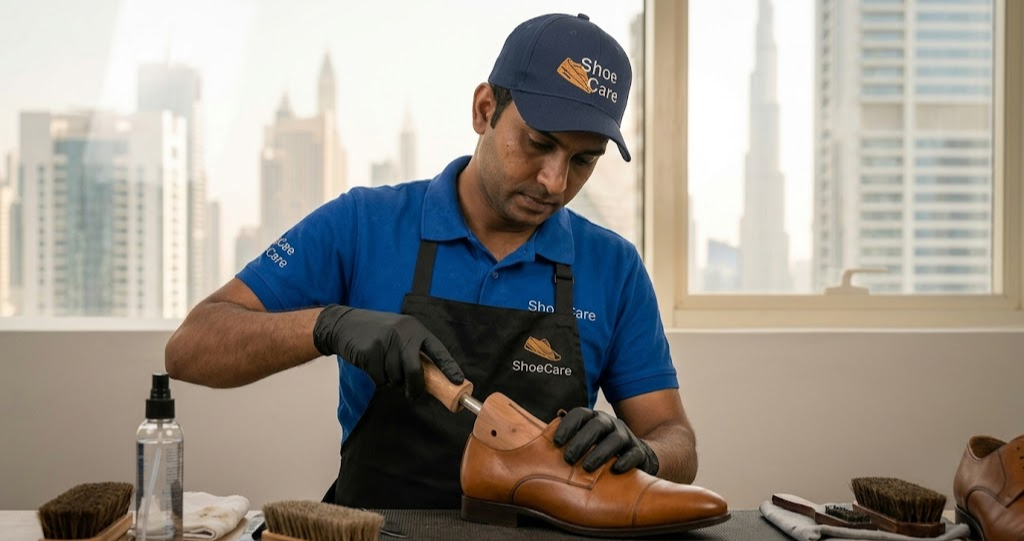
A two-way shoe stretcher is the most controlled at-home method. It applies steady mechanical pressure gradually, without the risks associated with heat or freezing.
Some stretchers come with removable plugs that apply targeted pressure to specific areas such as bunions or tight spots near the toes. A vamp stretcher creates additional room across the upper part of the shoe, helping with tightness around the instep.
Insert the stretcher fully inside the shoe, turn its handle until you feel slight resistance, then stop. The shoe should feel firm rather than distorted. Leave it in place for 24 to 48 hours, then make a small adjustment and repeat if necessary.
Two rules keep this method safe:
- Expand a little at a time. Quarter turns are enough.
- Size the stretcher to the shoe. An oversized stretcher distorts the toe shape.
For leather shoes, a wooden or cedar stretcher also helps with moisture and odour, a useful benefit in Dubai's humid months.
How to Stretch the Width of Shoes
Width is where stretching is most effective. To create more room across the forefoot, use a two-way stretcher designed to expand width. A spot-stretching plug can target a specific pressure point, such as the area around a bunion, without expanding the entire shoe.
Apply a compatible shoe stretching spray to the targeted area, insert the appropriate stretching plug, and leave the stretcher in place according to the manufacturer's instructions.
Length is harder to correct. Stretching the length of a shoe is limited and may put stress on toe caps, causing them to lose their shape. If your toes are pressing against the end of the shoe, that indicates the shoe is too short and stretching will not safely fix it.
Can You Stretch Shoes Quickly?
There is no guaranteed way to stretch shoes significantly within an hour without risking damage. For minor tightness, a compatible stretching spray and a properly sized stretcher may help improve comfort, but results vary by material and construction.
Wearing thick socks for a short period may also help, provided the shoes do not cause pain. Avoid using a hair dryer unless the manufacturer's care instructions explicitly permit gentle heat.
Hair dryer method: This method carries a risk of drying leather, damaging its finish, or weakening adhesives. A shoe stretcher and a suitable stretching spray are generally preferable. If the manufacturer's instructions permit gentle heat, use only a low setting briefly, keep the dryer moving, and stop immediately if the leather becomes hot. Heat should always be indirect and short. Never try to stretch shoes in a parked car or on a sunny balcony; the surface temperature can harden or crack leather and weaken adhesives.
Does the Freezer Method Work?
The freezer method involves placing a sealed bag of water inside a shoe and allowing the water to freeze and expand. Expansion is difficult to control and can damage the shoe's lining, finish, or adhesives. A shoe stretcher is a more controlled and safer alternative.
A leaking bag can wet the lining and leave water marks or cause deformation. Repeated freezing and thawing may also affect certain materials and adhesives. Avoid this method on suede, nubuck, delicate leather, or expensive designer shoes. For any shoe worth keeping, a properly fitted stretcher or professional care is the better option.
What Mistakes Damage Shoes When Stretching at Home?
- Using high heat. A hair dryer on its hottest setting, or a heat source held too close, dries leather and can crack the finish.
- Stretching dry leather. Without conditioner or spray, leather resists and then splits along stress lines.
- Over-expanding the stretcher. Cranking it hard in one session can tear seams and distort the shoe's shape.
- Applying water to suede. Water leaves permanent marks on suede and nubuck.
- Ignoring the shoe's construction. Glued soles and thin stitching around the toe can separate under strain.
- Trying to fix the wrong size. More than half a size difference usually needs a different pair, not more stretching.
A pair that has already cracked, split or lost its shape needs repair, not more stretching. See our guide on shoe repair and sole replacement Dubai if the damage has already set in.
Shoes Still Too Tight After Home Stretching?
ShoeCare stretches leather shoes professionally with free pickup across Dubai. AED 65 per pair, returned within 2 to 3 days.
Book shoe cleaning in DubaiWhen Should You Use Professional Shoe Stretching in Dubai?
Home methods may work for minor adjustments on suitable footwear. Professional stretching is the better choice in these situations:
- The shoes are designer, exotic leather, patent or heavily structured
- A tight area is specific, such as a bunion, a high instep or a narrow heel
- Previous home attempts have not worked
- The leather finish is delicate and cannot tolerate sprays or heat
- A mistake would be expensive to correct
Professionals use calibrated stretching equipment, controlled moisture and heat, and a feel for how each leather behaves, so the stretch is even and the shape is maintained.
Shoe Stretching Pricing at ShoeCare Dubai
| Service | Price (AED) |
|---|---|
| Shoe Stretching | 65 |
| Casual Sneaker Cleaning | 120 |
| Leather Shoe Cleaning | 120 |
| Sole Guard Installation | 85 |
How Do You Prevent Tight Shoes in the Future?
- Try shoes on in the afternoon or evening, when feet are at their largest after a day in Dubai's heat.
- Wear the socks you plan to use with the shoes when fitting them.
- Check both width and length, not just the size label, since sizing differs between brands.
- Walk around the shop for several minutes before buying.
- Break in new leather shoes at home for short sessions before wearing them all day.
- Use shoe trees after wearing to hold shape and prevent the leather from stiffening.