
By ShoeCare Team - Posted on 2026-11-21 - 11 min read
How to Stop Shoes From Squeaking: Causes and Fixes
This guide explains how Dubai residents, office workers, and sneaker enthusiasts can identify the causes of squeaky shoes and fix them at home or with professional help.
Professional Shoe Care
Need Expert Shoe Care?
Schedule a pickup and let ShoeCare handle deep cleaning, restoration, and protection for your shoes.
4.9 ★
Customer Rating
7,000+
Shoes Restored
Same Day
Pickup
In This Article
- 1Why Do My Shoes Squeak?
- 2How Can You Find Where Squeak Is Coming From?
- 3How Do You Fix Squeaky Shoes Caused by Insole?
- 4How Do You Stop Shoes Squeaking Because of Moisture?
- 5How Do You Stop Leather and Dress Shoes From Squeaking?
- 6Why Do New Shoes Squeak, and Does It Go Away?
- 7Why Are Shoes Squeaking More Often in Dubai?
- 8Which Home Remedies Should You Avoid?
- 9When Is a Squeaky Shoe a Repair Job?
- 10How Can You Prevent Shoes From Squeaking Again?
- 11Ready to Silence Your Squeaky Shoes?
- This guide explains how Dubai residents, office workers, and sneaker enthusiasts can identify the causes of squeaky shoes and fix them at home or with professional help.
- Friction between shoe parts, trapped moisture, dry leather, or loose structural components cause them to squeak; each needs a different remedy.
- Most squeaks caused by insole friction can be reduced with a little baby powder or cornstarch under the insole, while moisture-related squeaks can often be resolved by drying the shoes slowly without direct heat.
- Dubai's hot outdoor temperatures, air-conditioned indoor environments, humidity, and polished floors can all contribute to shoe squeaking.
- If powder and proper drying do not stop the squeaking, the problem may involve dry leather, outsole friction, loose components, or structural damage. Identifying the cause helps determine whether home treatment or professional repair is needed.
Squeaky shoes are a common footwear problem caused by friction, trapped moisture, dry materials, or loose internal parts. Noise can come from a new pair, a well worn favourite, or an expensive formal shoe, and it rarely goes away on its own. Knowing how to stop shoes from squeaking starts with finding the exact source of sound.
Identifying the source matters because different squeaks require different solutions. An insole that rubs against the footbed may need powder underneath, while a wet lining needs proper drying. A dry leather tongue may require conditioning, and a loose heel should be repaired by a shoemaker. Using the wrong solution can waste time and potentially damage your shoes.
Dubai's climate and indoor environments can create additional challenges for footwear. Heat, humidity, sweat, and polished mall floors can all contribute to squeaking. Shoes may also experience significant temperature changes when moving from hot outdoor pavements into air-conditioned buildings.
This guide explains why shoes squeak, how to identify the source of the noise, and which home remedies can help. It also covers when professional shoe repair is the better option.
Also read:
- How to Clean Arabic Sandals Before UAE National Day
- How to Clean and Care for Climbing Shoes in Dubai
- How to Clean Shoelaces Without Yellowing Them
Why Do My Shoes Squeak?
Shoes squeak when two surfaces rub against each other, or when air or moisture is pushed around inside the shoe as it flexes. Footwear has several layers, including upper, lining, insole, midsole, and outsole, and each layer moves slightly with every step.
Most common causes are:
- Insole friction occurs when the insole rubs against the footbed underneath it.
- Moisture from sweat, rain, or washing can become trapped between the insole and footbed, creating friction and squeaking sounds.
- Compression of trapped air occurs when there are small spaces between an insole and a shoe that compress and release during walking.
- Tongue, collar, or upper crease of dry leather rubs against itself.
- Stiffness of seams and new rubber soles are noisy until they become soft.
- Rubber outsoles can squeak when they grip and release against smooth surfaces such as polished tiles or marble floors.
- Loose structural components, such as an unsecured shank, a separating sole, or a loose heel, can move while walking and create squeaking sounds.
Some of these issues, such as insole friction, moisture, and minor leather rubbing, can often be addressed at home. However, loose structural components, separating soles, and damaged heels generally require professional repair.
How Can You Find Where Squeak Is Coming From?
Locating squeaks takes five minutes and prevents most wrong fixes. Walk slowly on a hard floor and listen, or ask someone to crouch near the floor while you walk.
Start with these checks:
- Remove the insole and walk a few steps without it. If noise stops, the insole is the source.
- Flex shoes by hand and listen for creaks from upper or sole.
- Press heel and forefoot against a table. A click or shift points to a loose sole or heel.
- Rub tongue against laces with your fingers. Leather rubbing on leather is a frequent culprit.
- Test the shoes on carpet and then on tile. If the noise only occurs on tile, the rubber outsole may be squeaking against the smooth surface.
A squeak that comes from underneath and sounds muffled usually sits inside the shoe. A sharper, higher sound that changes with the floor usually comes from the outsole.
How Do You Fix Squeaky Shoes Caused by Insole?
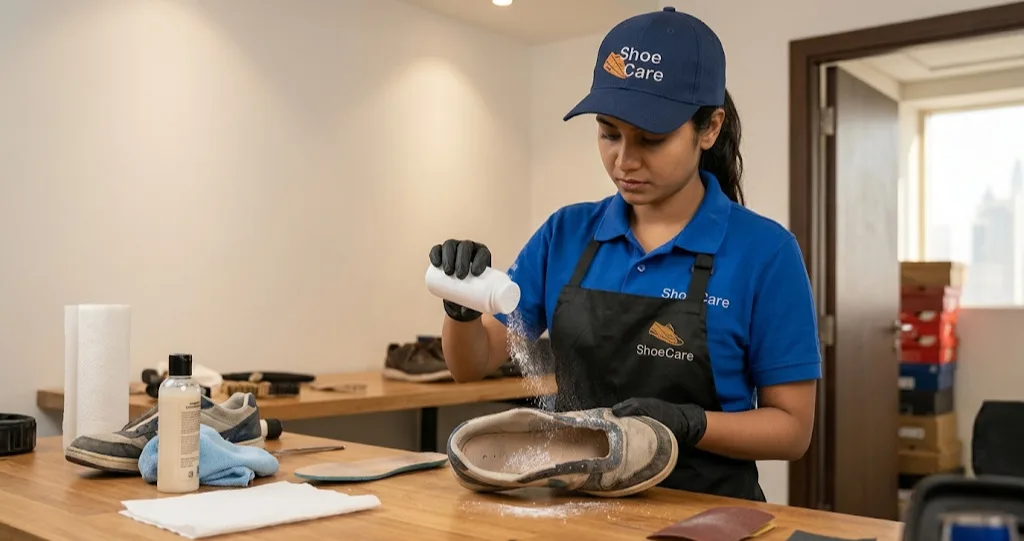
Insole friction is a common cause of squeaky shoes and can often be fixed with a simple home remedy. If the insole is removable, take it out and apply a small amount of cornstarch to the footbed underneath. Replace the insole and test the shoes. Avoid using powder on glued or non-removable insoles, as it may interfere with adhesives or accumulate inside the shoe.
Powder can reduce friction and absorb a small amount of moisture. However, avoid applying it around glued insoles, as it may interfere with adhesive bonding. If a glued insole continues to squeak, consult a shoe repair professional.
A few alternatives work for shoes that dislike powder:
- A folded tissue or paper towel placed under the insole acts as a cushion. Replace it every few wears.
- A dryer sheet under the insole works the same way and leaves a light scent.
- Avoid applying petroleum jelly or coconut oil under the insole, as oils can stain shoe materials, attract dirt, and affect adhesives. Try a suitable dry friction-reducing material or consult a cobbler instead.
Powder is a temporary fix, because it shifts and wears away with daily use. Reapply it every few weeks if squeak returns.
How Do You Stop Shoes Squeaking Because of Moisture?
Moisture is the second most common reason for shoes squeaking. Moisture trapped between the insole and footbed can change the friction between the two surfaces, sometimes producing squeaking sounds as the shoe flexes. Sweat, rain, and washing can all introduce moisture into the shoe.
Drying shoe completely solves most moisture squeaks:
- Remove insoles and laces.
- Stuff shoes with crumpled newspaper or paper towels and replace them every few hours.
- Place shoes in a ventilated room, away from direct sun, for 12 to 24 hours.
- Add baking soda or powder inside overnight to pull out the last of the dampness.
- Refit insoles only when both insole and shoe are fully dry.
Never dry shoes on a radiator, in a hot car, or in direct sunlight. High heat weakens adhesives and warps soles, which turns a minor squeak into a structural problem. A fan or cool air setting speeds up drying safely.
How Do You Stop Leather and Dress Shoes From Squeaking?
Leather shoes squeak for different reasons, and cause is often visible. Dry leather rubs against itself at tongue, collar, and creases of vamp. Hard leather soles can also squeak against smooth indoor floors.
For squeaks from upper:
- Remove the laces and apply a small amount of suitable leather conditioner to a clean, soft cloth. Gently work it into the areas where the leather rubs, such as the tongue, underside of the tongue, and vamp creases. Test the product on an inconspicuous area first.
- Work it into the tongue, underside of tongue, and crease in small circles.
- Wipe away excess and let shoes rest overnight.
Some shoe owners avoid saddle soap on fine leather because it can dry certain finishes, so conditioner is the safer first choice on formal and designer pairs.
If squeaks come from underneath the tile, the leather sole is likely slick and hard. A cobbler can add a thin rubber layer to the sole, which improves grip and often removes noise. If squeaks appear even on carpet, shank or heel base may have loosened, and no polish will fix it.
Why Do New Shoes Squeak, and Does It Go Away?
New shoes may squeak because their materials are initially stiff and have not yet become flexible through regular wear. New rubber soles and tightly stitched components can create friction as the shoes move. In some cases, the noise gradually disappears after a few days of regular use.
Wearing new shoes indoors for short periods can help the materials become more flexible. If the squeaking continues after two or three weeks, check for trapped moisture, insole friction, or loose components. Persistent noise may also indicate a manufacturing defect.
If a new pair continues to squeak loudly despite regular use, it may have a manufacturing defect. Check the retailer's return or exchange policy and contact the store while the shoes are still within the return period.
Why Are Shoes Squeaking More Often in Dubai?
Dubai's climate and indoor environments can create conditions that contribute to shoe squeaking. Three factors are particularly relevant: high temperatures, changing indoor and outdoor conditions, and humidity.
Heat and adhesives. Dubai's high outdoor temperatures can affect certain shoe adhesives over time, particularly when footwear is exposed to excessive heat. If the adhesive weakens, different shoe layers may begin to shift against each other, potentially producing squeaking sounds.
Moving Between Air-Conditioned and Outdoor Environments: Shoes experience changing temperature and humidity conditions when moving between air-conditioned offices and Dubai's humid outdoor environment. Sweat and trapped moisture can contribute to squeaking, particularly when footwear does not dry completely between uses.
Humidity and Polished Floors: Humidity can make it harder for shoes to dry completely after exposure to sweat or moisture. Meanwhile, rubber outsoles may produce high-pitched squeaking sounds when they grip and release against smooth surfaces such as polished tiles and marble floors in shopping centres and office buildings.
Humidity can also affect shoe materials over time. Polyurethane midsoles may deteriorate as they age, particularly when footwear is stored for long periods in unsuitable conditions. Rotating your shoes and storing them in a cool, well-ventilated area can help maintain their condition.
Which Home Remedies Should You Avoid?
Not every popular squeak hack is safe. Some make problems worse or cause new damage.
- Oil sprays and WD 40 on suede, nubuck, or mesh. Oil stains these materials permanently.
- Too much oil or lubricant on the outsoles. A slick sole is a slipping hazard on tile.
- Hairdryers on high heat or radiator drying. Heat weakens adhesives and shrinks leather.
- Washing machines. Soaking shoes pushes water into layers that cause moisture squeaks.
- Superglue on separating soles. It sets hard, cracks with flexing, and makes professional repair harder.
When a gentler fix does not work, stop experimenting. Repeated DIY attempts often turn a simple squeak into a bigger repair bill.
When Is a Squeaky Shoe a Repair Job?
A squeak that survives powder, drying, and conditioning is usually structural. Signs are easy to spot:
- The squeak continues with the insole removed.
- sole edge lifts or shows a visible gap.
- heel clicks or wobbles when pressed.
- shoe flexes in the wrong place.
- The sole has worn thin or cracked.
At that point, a professional can fix the root cause instead of masking the sound. Shoe Care Dubai handles these repairs with free pickup and delivery across Dubai, and most orders return within 2 to 3 days.
Relevant services include:
- Shoe Repair Gluing (AED 55) to re bond separating soles and loose layers.
- Heel Tip Replacement (AED 55) for worn heel tips that click, slip, or squeak.
- Sole Guard Installation (AED 85) to add a protective rubber layer to leather soles, which adds grip and often reduces noise on smooth floors.
- Sole Replacement (AED 645) for soles that have worn through or cracked.
If dirt, sweat, or salt residue has accumulated on your shoes, professional cleaning can help restore their appearance and remove surface contaminants. Cleaning starts at AED 95 for sports sneakers, AED 110 for formal shoes, and AED 120 for casual sneakers. Compared with the cost of a new pair, repair keeps a well fitting shoe in service for years.
How Can You Prevent Shoes From Squeaking Again?
Prevention is mostly about moisture control and regular care. A short routine covers most of it:
- Let shoes dry fully after sweat, rain, or cleaning, and use newspaper or shoe trees instead of heat.
- Rotate pairs so each shoe has a day to air out.
- Add silica gel packets to stored shoes to absorb humidity.
- Condition leather every few weeks to keep creases supple.
- Wear moisture wicking socks to cut down on sweat inside the shoe.
- Store shoes in a cool, ventilated space instead of a hot car or sealed plastic box.
- Check insoles and soles every few months for lifting or wear.
Small habits like these keep shoes quiet and extend their life, which matters in a climate that is hard on footwear.
Ready to Silence Your Squeaky Shoes?
Squeaky shoes are fixable once cause is clear. key points to remember:
- Squeak is usually caused by insole friction, moisture, dry leather, or smooth floors.
- Baby powder or cornstarch under the insole can help reduce squeaking caused by friction between the insole and footbed.
- Heat-free slow drying is a solution to moisture squeak problems because heat worsens them.
- The climate of Dubai and its polished floors lead to more squeaks; therefore, regular maintenance is important.
- Squeaks that cannot be resolved with home remedies may indicate a loose sole, damaged heel, or another issue requiring professional repair.
If your shoes are still squeaking after trying the steps above, let the specialists take over. Schedule your free pickup with ShoeCare Dubai and get professional shoe repair and cleaning services delivered back to your doorstep, with most orders completed within 2 to 3 days.