
By ShoeCare Team - Posted on 2026-07-30 - 8 min read
Shoe Repair Dubai: Complete 2026 Cobbler Guide
Dubai's heat softens shoe adhesives faster than most cities. Learn when to repair vs. replace, what each cobbler service costs, and how to get expert shoe repair in Dubai without visiting a mall.
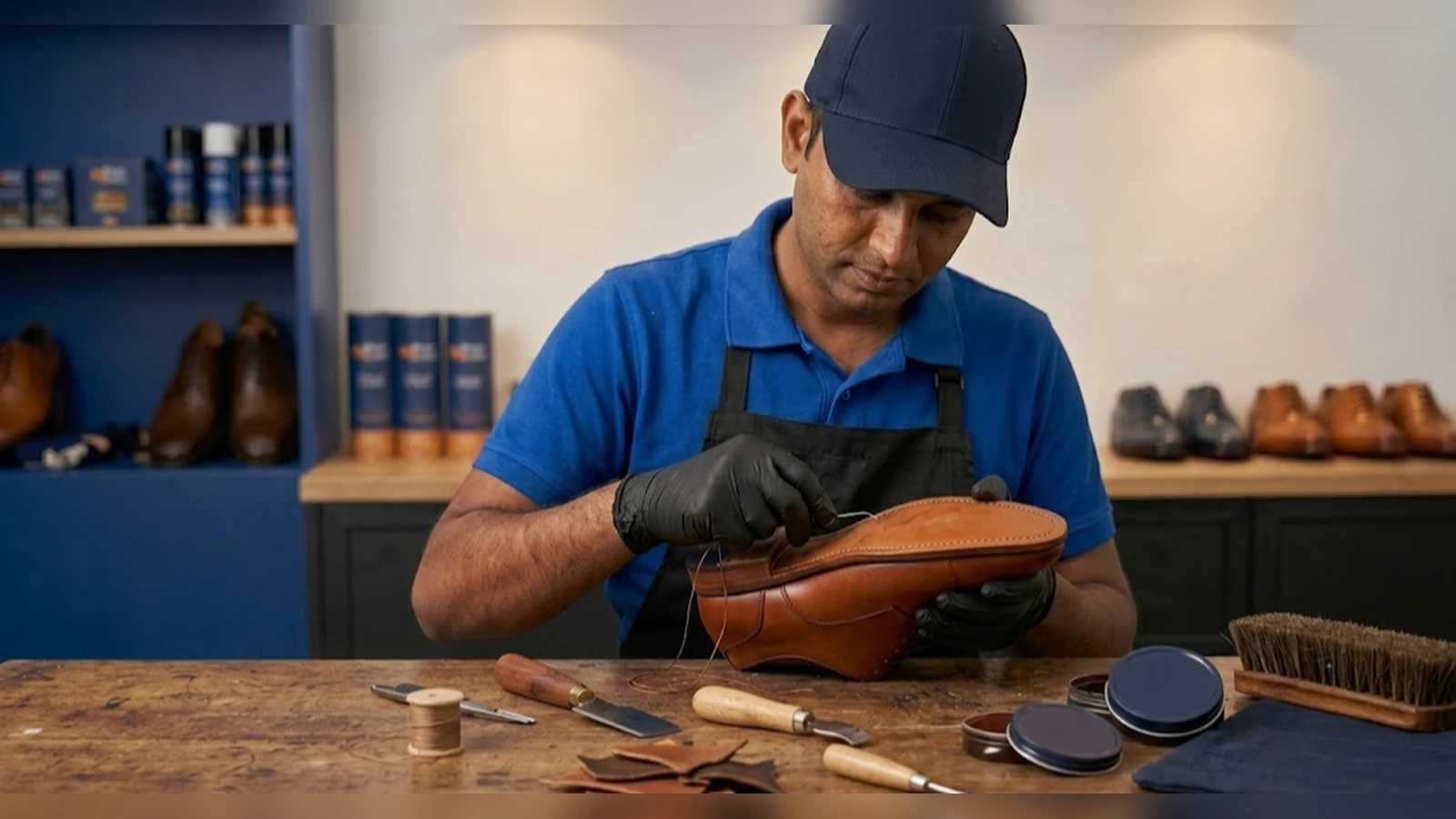
Professional Shoe Care
Need Expert Shoe Care?
Schedule a pickup and let ShoeCare handle deep cleaning, restoration, and protection for your shoes.
4.9 ★
Customer Rating
7,000+
Shoes Restored
Same Day
Pickup
In This Article
- 1Why shoe repair matters more in Dubai than almost anywhere else
- 2Repair or replace: the question most guides get wrong
- 3What a professional cobbler actually fixes
- 4Formal shoes vs. sneakers vs. boots: repair priorities differ
- 5The risk of DIY repair kits
- 6How to choose the right cobbler in Dubai
- 7Conclusion
TL;DR
- Dubai's heat, UV exposure, and humidity accelerate adhesive wear and sole deterioration more than most climates, so shoes need cobbler attention sooner than manufacturers' care guides suggest.
- The real decision is not "repair or replace" in the abstract. It is whether your shoe's construction (cemented vs. Goodyear welted) makes repair worthwhile in the first place.
- Sole replacement, heel tip repair, gluing, and stretching each solve different problems. Knowing which applies saves money.
- Pricing should be transparent before you commit, not decided after your shoes are already taken apart.
- A pickup-based repair service removes the actual friction behind "shoe repair Dubai Mall" and "cobbler Dubai" searches: you do not need to find the shop; the shop comes to you.
Shoe repair in Dubai is not the same job it is in London or New York. A cobbler working on leather derbies in a temperate city is dealing with normal wear. A cobbler working on the same pair in Dubai is often dealing with wear plus heat-softened adhesive, sand-abraded stitching, and materials that have been expanding and contracting with every transition between air-conditioned interiors and Dubai's outdoor heat.
That difference matters because it changes what "repair" actually means here, and how urgently it needs to happen. This guide explains when a repair is worth doing, why Dubai's climate accelerates the types of damage a cobbler fixes, what each repair service actually involves, and how to get it done without spending a Saturday searching for the right counter at Dubai Mall.
Also Read:
Shoe Waterproofing Dubai: Guide to Sprays and Methods
Best Way to Clean Leather Shoes in Dubai
Luxury Shoe Cleaning Service Dubai
Why shoe repair matters more in Dubai than almost anywhere else
Ambient temperatures above 45°C for months at a time do something specific to footwear: they soften the adhesives that hold soles, heels, and welts together. Cemented construction, a glue-based method used in most sneakers and many formal shoes sold in the UAE, was never designed to sit in a car boot or on hot pavement at those temperatures.
Add Dubai's other stressors and the picture becomes clearer. Fine desert sand works into stitching and seams, acting like sandpaper with every step. Coastal humidity in areas like Dubai Marina and JBR speeds up sole delamination, the gradual separation of a sole from its upper. And the daily swing between 22°C indoor air conditioning and 40°C+ outdoors puts materials through an expansion-and-contraction cycle that no shoe repair guide from overseas accounts for.
The result is that shoes here need cobbler attention on a shorter timeline than manufacturers' care guides suggest. A heel tip that would last eight months in a mild climate might wear through in four here. A sole that is starting to separate at the toe should be re-glued within weeks, not months, before humidity and dirt worsen the damage.
Repair or replace: the question most guides get wrong
Most shoe repair advice frames this as a simple cost comparison: is repair cheaper than a new pair? That is the wrong question. The right one is whether your shoe's construction makes it repairable at all, and only then whether it is worth doing.
Shoes are built one of two ways. Goodyear welted construction stitches upper, insole, and sole together around a welt, a strip of leather or synthetic material running the perimeter of the shoe. This construction is designed to be resoled multiple times over a shoe's life, which is why it appears in higher-end formal shoes and boots. Cemented construction glues the sole directly to the upper with no welt. It is cheaper to manufacture, used in the vast majority of sneakers and many mid-range formal shoes, and far more limited in what a cobbler can fix once the bond fails.
This distinction decides everything. A welted dress shoe with a worn sole is a straightforward, high-value repair. A cemented sneaker with a fully separated sole is often a gluing job with a shorter lifespan afterward, not a full resole. Knowing which one you own before committing to a repair saves you from underspending on a shoe that deserved a full restoration, or overspending on one that was never built to be extensively repaired.
Beyond construction, three other factors help determine whether a repair is worthwhile:
- Sentimental or resale value. Designer shoes, limited sneakers, and formal shoes tied to a specific fit are almost always worth repairing over replacing, even at a higher repair cost.
- Extent of damage. A worn heel tip or a small glue separation is a fast, low-cost fix. A collapsed heel counter or a sole cracked through in multiple places is a sign the shoe has reached the end of what repair can practically address.
- Cost of the original shoe. A repair costing more than 40 to 50 percent of what a comparable new pair costs rarely makes financial sense unless the shoe has value beyond its price.
What a professional cobbler actually fixes
"Cobbler" gets used loosely, but professional shoe repair in Dubai covers a specific set of jobs, each solving a different failure point.
Gluing and sole separation repair
This is the most common Dubai-specific repair, directly caused by heat-softened cement bonding. When a sole starts lifting at the toe or edge, usually visible as a small gap when you flex the shoe, it needs re-gluing before dirt and moisture get further into the bond. Left alone, a small separation becomes a full sole detachment within weeks in Dubai's climate.
Heel tip replacement
The rubber tip on a heel wears down before anything else on most shoes, since it is the single point of contact with the ground. Once it wears through to the plastic or metal core underneath, every step damages the heel stack above it. This is one of the cheapest and fastest repairs a cobbler performs, yet it is also one that many people delay until a simple fix becomes a more expensive heel reconstruction.
Sole replacement
A full resole replaces the entire sole unit rather than patching wear. This is where construction type matters most: welted shoes are built for this, cemented shoes far less so. A proper resole restores grip, corrects uneven wear from your walking pattern, and on formal shoes, resets the shoe's overall silhouette.
Shoe stretching
Not every repair fixes damage. Stretching adjusts fit, widening tight spots at the toe box, easing pressure points, or accommodating width across the ball of the foot. It is done with dedicated stretching equipment and moisture, and works best on genuine leather rather than synthetic uppers, which do not hold a stretch as well.
Sole guard installation
A preventive rather than corrective service. A thin protective layer is added to the outsole of dress shoes and premium sneakers, absorbing wear that would otherwise hit the original sole directly. This is worth doing proactively on any shoe you plan to keep long term, particularly designer pairs where you want to delay a resole as long as possible.
Formal shoes vs. sneakers vs. boots: repair priorities differ
Formal leather shoes are usually built with more repairable construction and higher resale or reuse value, which makes sole replacement and heel repair consistently worthwhile. Watch for sole separation at the welt line and heel wear that has started to expose the shoe's structure underneath.
Sneakers, especially cemented sports and casual pairs, wear differently. Midsole compression, outsole separation at the toe, and glue failure around the upper are common issues, and repair viability depends heavily on the specific sneaker's construction. designer sneaker cleaning Dubai often justify repair even on cemented builds because of replacement cost alone.
Boots face the heaviest Dubai-specific stress: desert dust working into stitching, salt exposure if worn near the coast, and heavier soles that put more strain on adhesive bonds in the heat. Boot repairs tend to combine gluing, heel work, and sole guard installation together rather than a single isolated fix.
Book Your Shoe Repair in Dubai
Free pickup across Dubai. Fixed pricing before work begins. Most repairs completed in 2 to 3 days.
book shoe repair in DubaiThe risk of DIY repair kits
Shoe glue and heel repair kits are widely available and genuinely useful for a temporary fix. What they do not do well is match the original adhesive's flexibility, achieve full coverage across the bonding surface, or account for how Dubai's heat will affect the repair once it is back in daily wear.
A poorly done DIY glue job often fails faster than the original damage, and can make the shoe harder for a professional to repair afterward because the surface needs to be cleaned of old adhesive first. For shoes with real value, a professional repair the first time is usually cheaper than a DIY attempt followed by a professional fix anyway.
How to choose the right cobbler in Dubai
Four things separate a good cobbler from a mediocre one, whether they are mall-based or pickup-based:
- Ask whether they assess construction type before quoting. A cobbler who quotes a full resole without checking if your shoe is welted or cemented is guessing, not diagnosing.
- Check whether pricing is disclosed before the shoe is disassembled. Repair shops that only quote after removing the old sole or heel put you in a weak negotiating position.
- Look for material-matched repair work. On leather and suede, the wrong adhesive or finish can visibly mismatch the original.
- Confirm turnaround time upfront so your shoes are not left waiting unnecessarily and you know when they will be back in service.
Conclusion
Shoe repair in Dubai is not optional maintenance. It is a response to a climate that actively works against your footwear faster than almost anywhere else. The decision that matters is not repair versus replacement in the abstract. It is understanding your shoe's construction, catching damage early, and choosing a cobbler who is transparent about both.
Whether it is a heel tip worn through, a sole starting to separate, or a formal shoe overdue for a full resole, waiting rarely saves money in Dubai's heat. Get an honest assessment and a fixed-price repair before minor damage turns into a full shoe colour restoration Dubai.